I had been selected to participate in an innovative and pioneering study on prescribed fire, the act of deliberately applying fire to the landscape. Outcomes were to be measured, studied, and debated. There were doubters, and professional credibility was on the line.
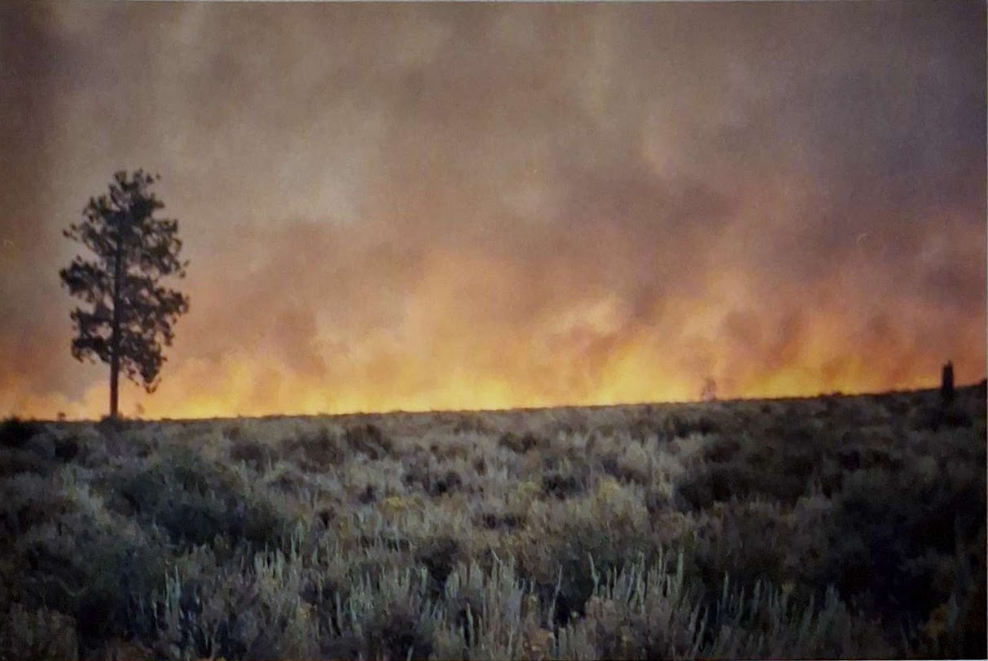
The smoke made my eyes tear up. It obscured the stars in places and turned my face black, but I didn’t care. Before me were acres of flames. Fire that I had lit hours before. It was creeping along the pine forest floor, consuming the needles, duff, and debris that would become fuel for a wildfire later if not burned now.
Alone on a highway at night, assigned to maintain a prescribed burn, I had doubts. Not about the methods or procedures, but about my capabilities as a firefighter. This was my first assignment as IC, Incident Commander, and I was nervous.
Can I keep the fire where it is supposed to be?
How will I handle smoke blowing across the highway?
What if this gets bigger than I am comfortable with and no one answers the radio?
I wasn’t sure I felt ready for this.
But fire doesn’t wait for you to feel ready.
That’s the part no one tells you about leadership. You don’t always have the luxury of feeling ready. You step up because the situation requires it. You build readiness in the process, through the act of embracing the challenge.
I didn’t overcome my doubts and fears through a single moment or event. I learned to move forward in spite of them.
Many of my formative experiences came from my time as a wildland firefighter. I was often the only woman on the crew. There were moments when I questioned whether I belonged. What I came to understand is that competence comes before confidence; and competence is built through action, repetition, and stepping up even when you are unsure.
What I once saw as setbacks, or even failures, forced me to become more resourceful, more independent, and more determined.
Those lessons directly impact my work as an education entrepreneur.
When I began building my microschool and supporting other founders, I had a major case of impostor syndrome. I don’t have a degree in education or business. I wasn’t sure that I had what it takes to make this new model work. But I couldn’t wait until I felt completely confident or prepared. Learners in my community needed a solution. Waiting until I had every detail figured out was not an option. I had developed a tolerance for being uncomfortable while working in fire. And now I relied on a proven firefighting strategy: Take one step at a time, solve the next problem, and stay focused on the outcome.
Eventually, I stopped asking, “Do I belong here?” or “Why me?” and started asking, “Where can I make a difference?” and “What needs to be done next?”
These are the questions that drive the movement and fuel innovation. Overcoming imposter syndrome isn’t about eliminating doubt. It is about trusting your ability to act, even when doubt is present.
Many education entrepreneurs come to this work without fancy credentials or an institution’s stamp of approval. Not being limited by traditional systems and conventional, inflexible methods may just be their greatest asset. It can, however, fuel a feeling of not being legitimate or fully in command of all the responsibilities of their new role.
Fortunately, readiness is built through commitment to action, and confidence builds when individuals are given the space to take responsibility, try, fail, iterate, and see what they are capable of.
Successful leaders tend to embrace three fundamental skills: the ability to act with certainty, a willingness to take responsibility, and learning how to think in systems. These skills can be acquired intentionally through deliberate practice.
One of my greatest mentors in firefighting taught me to act decisively and to embrace making a decision. He encouraged me to be bold once I had evaluated conditions and weighed the risks versus the rewards of a given decision, and then to own the outcome. This has been foundational for me as an entrepreneur as well. You won’t always have all the data, and you may not feel fully confident, but that does not mean that you are not capable.
Fire behavior, team dynamics, and environmental conditions are all connected. You can’t look at any one piece in isolation. The same is true in building an innovative education space. Enrollment, programming, leadership, and finances are all interdependent. Once you start to see those connections, you can make better decisions and avoid solving the same problems repeatedly.
No matter where you are in the process of building your dream program or your ideal life, start where you are at, and take the next step. Don’t wait for a perfect plan. Observe what is working and what isn’t, and adjust. Choose situations where you are uncomfortable, even in small ways. The growth won’t happen all at once. It’s built through experience, repetition, and a willingness to keep moving forward, even when you’re not sure yet where it leads.
I used to think confidence came first. That once I was ready, I would step up.
What I learned instead is this: You don’t wait for readiness.
You build it, one decision, one action, one step at a time.