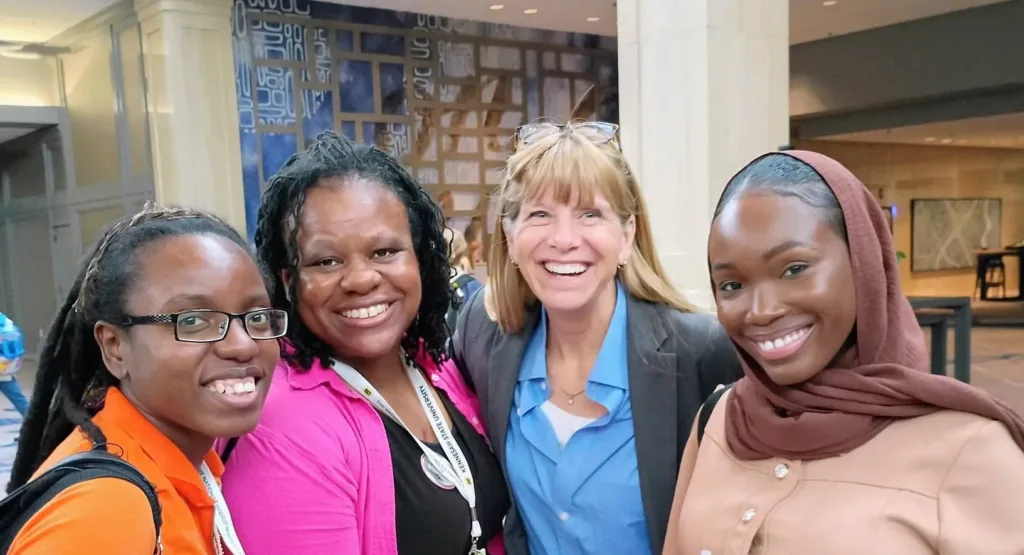
The National Hybrid School Society Conference, held annually in Atlanta, Georgia, once again invited founders to gather. Kennesaw State University launched this conference in 2022 to convene hybrid school founders and to track the rise of “community-crafted education,” which they describe as the blend of homeschooling and in-person education structures. Led by Dr. Eric Wearne, the project has tracked the evolution of small startups to the still niche hybrid model. Their research predicts a long-term shift in education structures.
While I have attended this conference in the past, I was honored to participate this year as a presenter. The event is focused on bringing together a diverse group of people, some ardent in their classical or faith focus, others committed to tech or SEL. Founders, parents and advocates tend to be “intense,” as Eric puts it. To be compelled to create something as unorthodox as a hybrid school takes vision and tenacity. While discussion may sometimes be animated, diversity of thought creates friction, and friction often produces better ideas.
Between sessions, Jess Alfreds, founder of Carolina Kids Co-Op that serves nearly 1,000 students across several states, told me that a single conversation we had three years ago changed the trajectory of her business.
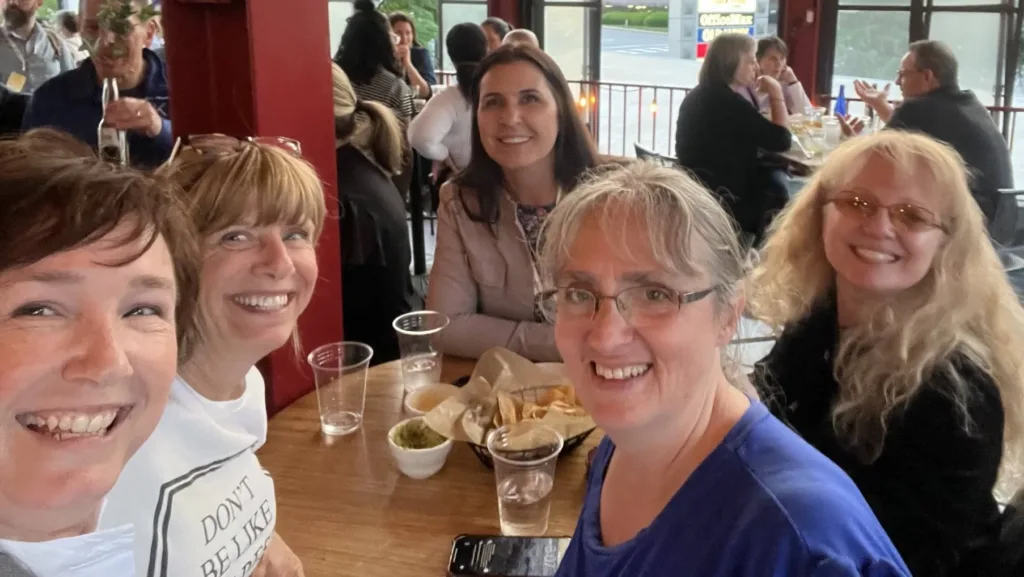
At the time, she had been trying to decide how to expand and was focused on franchising and the capital it would require. I challenged her assumptions that scaling required centralized control and encouraged her to consider more flexible ways to grow. That conversation shifted how she saw her options, and the decisions that followed reshaped her company.
She may have come to Atlanta to learn something new, but what she stopped me to share was what that earlier conversation set in motion.
Gatherings like these are where real decisions get shaped when no system exists to guide them.
Founders don’t come to gatherings like this looking for courage. They come to test their thinking against people who are actively building and making these calls every day.
We show up expecting to find the next tool, the right curriculum, or a better way to run our programs. And sometimes we do.
But that’s not what matters most. What moves the work forward are the conversations. The moments where you talk through a decision with someone who understands the weight of it. The chance to see how others are navigating similar challenges.
That’s where clarity comes from.
In a pioneering educational movement like this, clarity is often the difference between indecision and progress.
Later in the conference, another founder, Jennifer Wolverton, told me a speaker had hit a nerve. She’s been building for a few years, and now she is facing a different decision: how to grow without compromising her mission and vision.
In her keynote, Coi Marie Morfield named the tension many hybrid school founders are feeling. You build with soul in the beginning, but growth often requires different leadership than creation.
Jennifer isn’t alone. More founders are reaching this point, where the question is no longer how to start, but how to grow without losing what made the program work for families in the first place. There isn’t a clear blueprint for that.
This is the thinking that founders come to test when we gather.
Gatherings like this do more than help founders share ideas. They make it possible to move forward.
One might assume chaos and discontent in a room full of individuals whose only common principle may be education freedom, and where their only shared experience may be the loneliness of leadership. But camaraderie and fellowship claimed the day.
Decisions don’t get made on stage. Strategy and tactics get worked out in conversations like these.
And in a movement like this, that’s how the work moves forward.