A few days after Rooted in Connection, the inaugural homeschooling summit hosted by Learn Beyond the Book in Los Angeles, my phone rang.
It was Kristina, a first-year homeschooling mom who attended a panel discussion of homeschooling veterans. She wasn’t calling to ask for my recommendations on curriculum, scheduling, or documentation. She had a different concern.
“How do I build a life that allows me to keep doing this?”
That conversation is the heart of why I founded TrailBlazED and why I support education entrepreneurs who are building new learning communities.
When Elmarie Hyman, founder and director of Learn Beyond the Book, created Rooted in Connection, she gathered together an impressive group of homeschooling families, education entrepreneurs, policy leaders, and innovators from across California and beyond. I had the privilege of speaking on several topics alongside education journalist Kerry McDonald of FEE’s Education Entrepreneurship Lab, Lynn Swanson of the Stand Together Edupreneur Resource Center, Lance Christensen of the California Policy Center, Jennifer Wolverton of MARS, Lizette Valles of the California Microschool Collective, and many others working to expand educational opportunity.
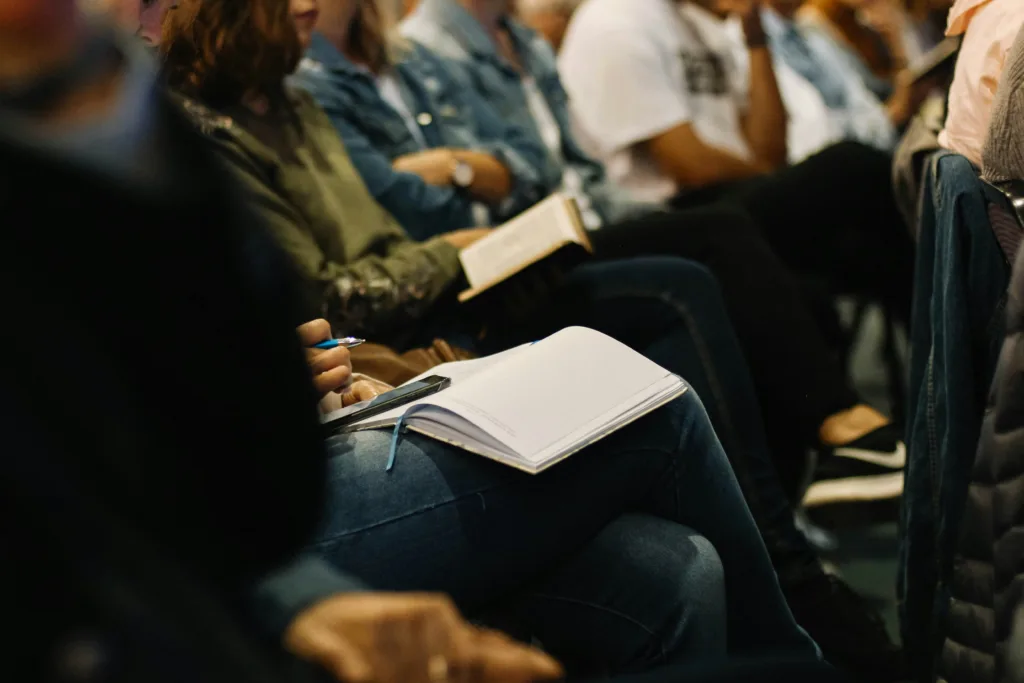
Like most conferences, there were thoughtful keynote sessions, practical workshops, and valuable resources. Those laid the foundation for the relationships that were built off stage, in the conference hallways, and over lunches as attendees continued to find ways to help families navigate their educational journeys.
Kristina’s story is one example of these deepening relationships.
Like many parents, her decision to homeschool wasn’t driven by a single issue or event. Her son had severe food allergies. She wanted him to learn to read early so that he could safely identify food ingredients. He had shown early interest in academics, and she wanted him to learn at his own pace instead of learning at a traditional classroom rate. Most of all, she wanted to enjoy his childhood and establish a great relationship.
During our conversation she said, “The list just keeps getting added to, of why I’d like to continue homeschooling.”
She also described a common pressure of so many homeschool families.
Kristina initially assumed that she would homeschool her son for kindergarten, and once she felt secure that he could navigate his allergies without her advocacy, she would return to the workplace. Not because she wanted to stop homeschooling, but because she needed to return to work to support her family financially. She had saved and sacrificed her house down payment to be able to stay home with her son and homeschool for his kindergarten year.
She felt the value of her decision to homeschool deeply; yet she hadn’t found a version of her current life that was sustainable.
Our conversation quickly became a brainstorming session on entrepreneurship.
We discussed what it might look like for her to build a fractional executive assistant business, as this was her role pre-homeschooling. We explored how to form an LLC and how to connect with education program founders and examine opportunities within the state’s growing microschool movement.
As a conference attendee, Kristina could easily and conveniently reach out to Elmarie Hyman and Lizette Valles, whose experience could help her navigate the local choice landscape.
Soon her mindset was no longer “Can I continue homeschooling?” It became a mission to build her own opportunities alongside homeschooling her son.
Sometimes, education entrepreneurs don’t only create schools, microschools, or learning programs.
They create pathways.
They connect parents with mentors, founders with collaborators, and families with opportunities they didn’t know existed.
After the summit, I emailed Elmarie to gather her reflections on the summit. She observed that one of the unexpected benefits was watching people who sometimes “feel like an island” realize that they are part of a much greater movement. She shared that even members of her own team were inspired by the expansiveness of the education entrepreneurship community. Kristina shared the same revelation. After attending Rooted in Connection, she didn’t have all the answers, but she no longer felt like a solo traveler on the educational journey she wanted for her son.
I often hear education freedom described as school choice.
That is only a small part of the narrative.
Freedom and choice are only the beginning.
Families and learners also need mentors, knowledge, relationships, and a community willing to say, “You don’t have to figure this out alone.”
As Kristina said, “I didn’t know what I didn’t know.”
When I was invited to Los Angeles, I said yes to a friend and a mentor in support of her vision.
I have come to realize that Rooted in Connection wasn’t only the name of her event.
It was the strategy. The workshops were the tactics. And the community, her objective.
Founders are still making introductions, and families are continuing to share resources. New partnerships are being built. Parents who showed up with curiosity are discovering new possibilities.
These connections continue long after the last workshop.
Perhaps an innovative learning environment isn’t the most important thing education entrepreneurs build.
It is communities where families discover that they don’t have to navigate educational freedom alone.