We’re three weeks into the 2026–27 academic program year for eXtend Homeschool Tutorial, and looking around, I am struck by how much we have evolved over the past three years as we responded to challenges surrounding program space. The opportunity to reflect on that journey came when a colleague asked me to share the story of how we returned to in-person learning, and in doing so, I realized that the lessons we learned could benefit other founders. Finding and maintaining program space is a struggle familiar to many founders in the Indie Ed movement, and in our situation, our ability to weather those storms came down to three things: flexibility, perseverance, and strong relationships. Here’s how each one showed up.
From our program’s beginnings in 2017 until December 31, 2023, we were in a dream location that we initially overlooked. My children had been part of Mt. Oak’s youth group and homeschool sports program for several years, and when my program, eXtend, was being birthed, it never occurred to me to ask if Mt. Oak would host our program. It was only after visiting and meeting with five other area churches that my husband recommended Mt. Oak. He accompanied me to that first meeting, and in large part because of our existing relationship, they agreed to host our program.
Mt. Oak did more than just host us. We had keys and access to their building whenever we needed it, and through that partnership we held events that benefited homeschoolers far beyond those in our program. When we expanded to high school, we formed a new relationship with Judah Temple AME Zion Church, a church that was literally right up the street from Mt. Oak. That 60-second drive proved invaluable to our instructors who taught at both locations, and to families with students who attended classes at both. Looking back, I can see that the relationships we built in those early years were an investment. We just didn’t know yet how much we would draw on them.
All of that ended on December 31, 2023, when Mt. Oak Church, which had been in existence since 1881, closed its doors and sold its building to another local church. Although the new church’s standing policy was not to open its building to anyone other than its own members, they graciously allowed us to remain in their building through the end of our program year.
By March 2024, we had secured another location at Providence St. John’s Church, approximately 30 minutes south of where we had been. The senior pastor had been one of our families several years earlier, and it was that relationship that made the 2024–25 year possible. However, it came at a cost. Their building was significantly smaller, with much smaller classrooms, and the distance from our original location made it impossible for us to maintain the high school campus at Judah. We adapted by closing first and second grade. It was a painful yet necessary decision, and our enrollment dropped significantly, both because of the distance and because of the limits we had to place on class size. Flexibility, I was learning, rarely comes free.
In July 2025, as we were preparing for our second year at our new location, we were informed that, due to zoning regulations that arose as the church was changing its name, we would not be able to meet there. It was a second blow that was completely unforeseen. With less than two months until the start of classes, we made yet another costly move, the only one we could make under the circumstances. We pivoted to a fully virtual program for 2025–26, and once again, it cost us. Parents who had signed up expecting in-person instruction were refunded their money, and our program equipment (tables, science equipment, dry-erase boards, tutor bins, everything) moved into storage. Enrollment again suffered. Yet, despite everything, a number of families stayed with us. Together, our perseverance kept the community alive when we had no building to contain it.
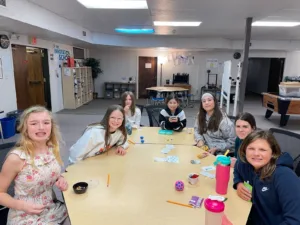
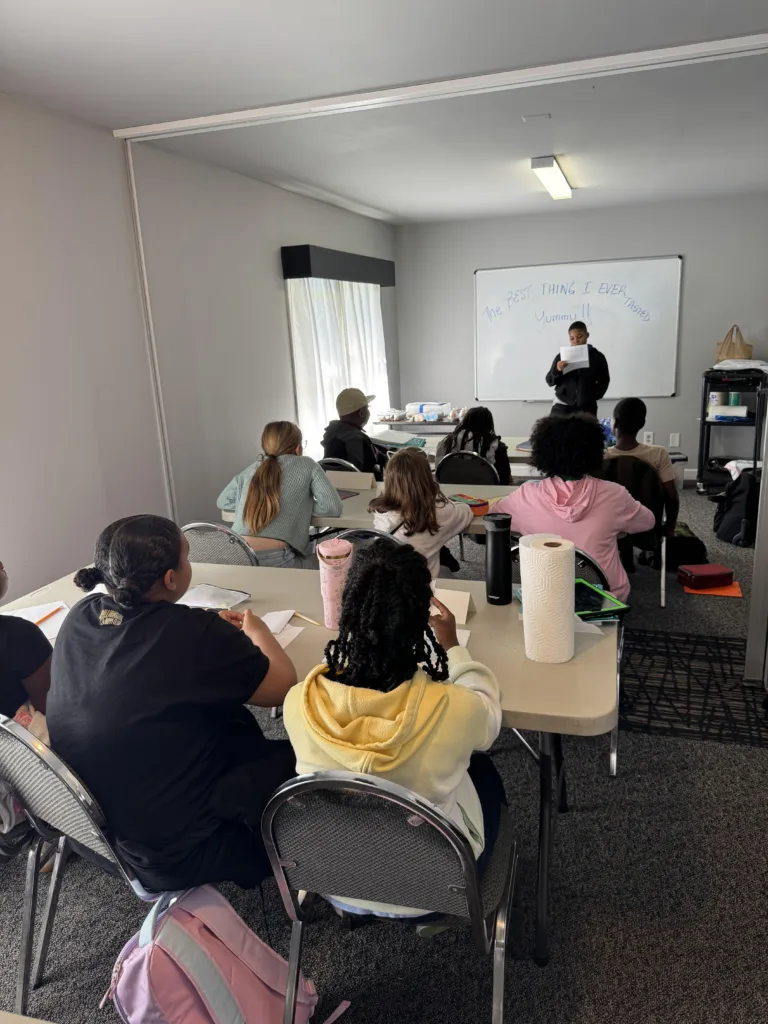
Searching for ways to connect, I reached out to Judah Temple and asked if we could meet at their church two Fridays a month to allow our science instructors to meet with their students and conduct labs. They graciously agreed, and we discovered that other instructors wanted to use those Fridays to meet with their classes as well. Those Fridays quickly became our Resource Days. While there were always science classes meeting, our math classes gathered for enrichment activities, our English/language Arts classes held student presentations, and even our US Government class met for a Political Satire Comic Fair. We saw our community connect in ways that we never expected.
Recognizing the impact and importance of those in-person days to our community, one of our science instructors proposed an ingenious idea. Although there was limited space at Judah Temple, what if we split our community? On one day, the elementary and middle school students would meet in person, and on the other day, our high schoolers would meet in person. Classes would meet virtually on the alternate day. Flexibility wasn’t reserved for me as founder; it became a characteristic of our community. We proposed the idea to Judah, and they were delighted to have us back in earnest!
With our current schedule, third through seventh graders meet in person on Tuesdays and virtually on Thursdays. Our eighth graders, many of whom also take high school classes, and our high schoolers meet in person on Thursdays and virtually on Tuesdays.
Sitting in the foyer of Judah, I am amazed by our story. At its heart is the resilience of our community, from our instructors to every family. Our community has nearly doubled, and we are looking to establish even stronger relationships within our community as we move forward.
Looking back, I can see that none of these three things could have carried us alone. Relationships opened every door we walked through, from Mt. Oak to Providence St. John’s to Judah Temple. However, a door is only useful if you’re willing to walk through it in a form you didn’t plan on, which takes flexibility. Flexibility, in turn, meant nothing without perseverance, because every adjustment we made cost us families, revenue, or a grade level, and we had to keep going anyway. Perseverance without relationships leads to empty isolation. It was the families who stayed and later invited others in, the instructors who dreamed up new schedules, and the churches who said yes that kept us going.
If you’re a founder facing your own space crisis, here’s what I recommend: Hold your model loosely, and hold your mission tightly. Build relationships now before you need them, because you will invariably need them. Finally, if the plan falls through, and it may more than once, remember that your program is not a building. It’s a community. Ours has changed three times in three years, and it has never been stronger.