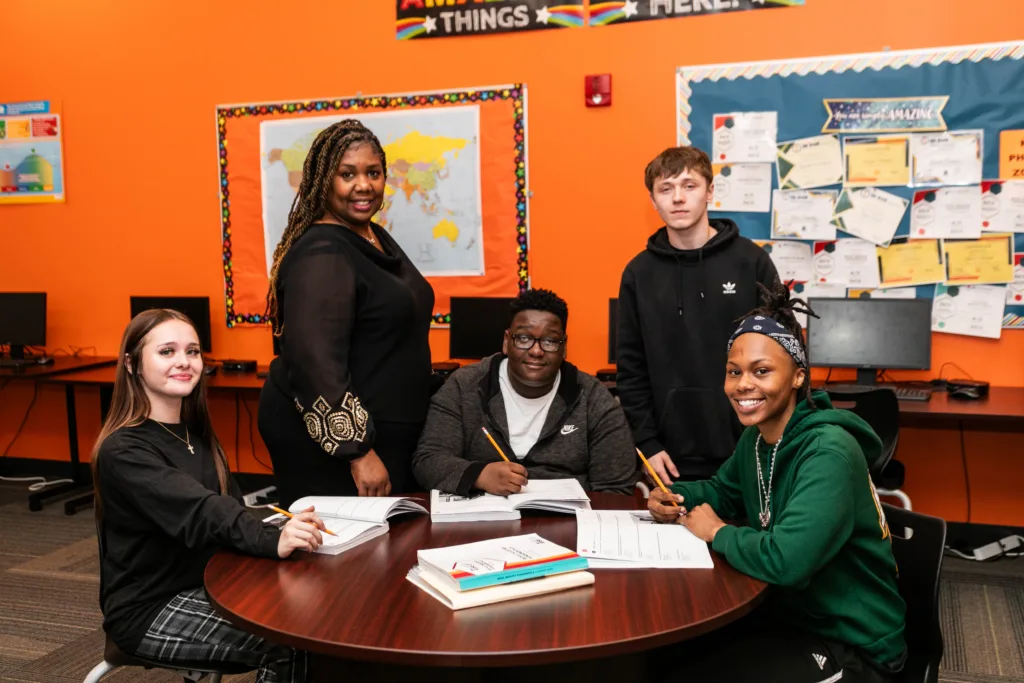
There’s a quiet population in American education that rarely makes headlines. In fact, while there is plenty of conversation surrounding disappointing NAEP scores, lack of preparedness for postsecondary education, and chronic absenteeism, it’s difficult to find much in the media that calls attention to the issue of those students who have given up altogether on high school. These are the young adults who, for any number of reasons, have fallen behind, disengaged, and quietly exited the school system. Quite often, they leave carrying far more than missing credits, and the impact of their departure isn’t just personal; it is societal.
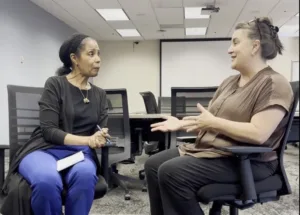
My interview with Randy Smoot of Oakmont Education explores what happens when a meaningful effort is made to bring these students back, and the impact of designing an education not for the ideal student, but for the real one. Oakmont’s work in dropout recovery and prevention doesn’t begin with a discussion of test scores or educational policies addressing absenteeism. Instead, it begins with Randy asking one simple question: “How can I help?”
Dropping out of high school exacts a high price not just on the student, but also on society as a whole. For the student, the personal cost includes disappointment, self-doubt, questions of self-worth, and uncertainty about the future, in addition to measurable financial ramifications. According to a May 2025 Career Outlook publication from the US Bureau of Labor Statistics, high school dropouts have the highest unemployment rate and the lowest median weekly earnings among all education levels, at 6.2% and $738, respectively.
For the nation, the cost of high school dropouts is felt in communities, the workforce, and the overall economy. According to a report by the National Center for Education Statistics (NCES), “the average high school dropout costs the economy approximately $272,000 over his or her lifetime in terms of lower tax contributions, higher reliance on Medicaid and Medicare, higher rates of criminal activity, and higher reliance on Welfare.” With NCES reporting 2.1 million “status” dropouts—those between the ages of 16 and 24 who are not enrolled in school and have not earned a high school credential—the potential long-term impact is massive.
Enter Oakmont Education, taking this challenge head-on, and radically changing the outcomes for these oft-forgotten students. With 22 schools primarily across Ohio, and new schools now open in Iowa and Michigan, Oakmont Education is a charter school operator that serves approximately 5,500 students and anticipates enrolling an additional 500 this year. By specializing in career and technical education (CTE) for students ages 15 to 22, Oakmont is specifically reaching the population NCES has identified as most at risk, and providing viable solutions to the economic impact associated with high school dropouts. Its positive impact led Oakmont to be named a 2022 finalist for the prestigious Yass Prize for education innovation.
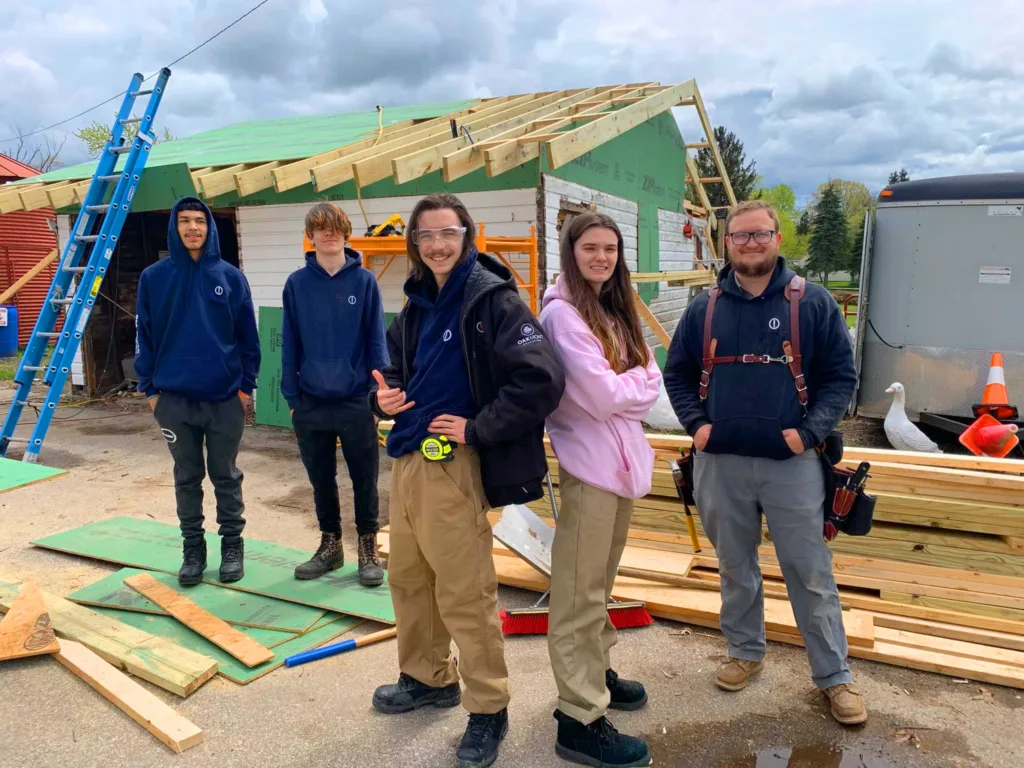
How Oakmont has achieved such tremendous outcomes is a study in what happens when an organization challenges traditional thought and methodology and instead embraces a completely unconventional approach to education. This radical approach begins with the leadership, and Randy Smoot is living proof of the value of looking beyond titles and degrees in search of effective leadership, authentic relationships, and genuine commitment, regardless of the package in which it comes. With no degree in education, Randy is now running one of the most successful dropout recovery and prevention programs in the country, one that is providing real answers and real solutions, and changing the lives of young people who once seemed lost to the system.
In Randy’s own words, “Oakmont found me.” Originally a supply-chain manager for Target, Randy returned to his hometown of Springfield, Ohio, and accepted a position in the Juvenile Court system, working as a probation officer in the truancy department. In that role, he received a firsthand education into many reasons why students weren’t acquiring the education that was being offered in the public system. What he discovered time and again was that these students were simply disengaged. In response to what he was seeing came the words, “How can I help?”
Partnering with a local dropout prevention and recovery high school, Randy inquired about having his students participate in their career tech program. Those discussions led to Randy accepting an invitation to run nearby Liberty High School. During his tenure there, Randy and his team accomplished the seemingly impossible—enrollment tripled, and the school that had once been struggling academically was now exceeding state standards. He was asked to take over Cliff Park High School to replicate those successes. Finally, Randy was asked to direct all of the schools under the Oakmont umbrella, bringing with him those victories and further opportunities to reach more students in more communities.
Randy attributes Oakmont’s success to their commitment to educating and caring for the whole student, and for them, that begins with taking the time to understand every aspect of their students’ lives. In his words, “We have to know who our students are, and we have to be able to meet them exactly where they are. We have to care enough about them to meet them exactly where they are, them and their families.” The second, equally important ingredient for this success comes from the team at Oakmont: “Finding people who believe in the vision, who believe in the mission, who believe in the movement and the culture and core values; without that, it is impossible to maintain the level of excellence day after day.” Randy has built such a team, and it has led to extraordinary results.
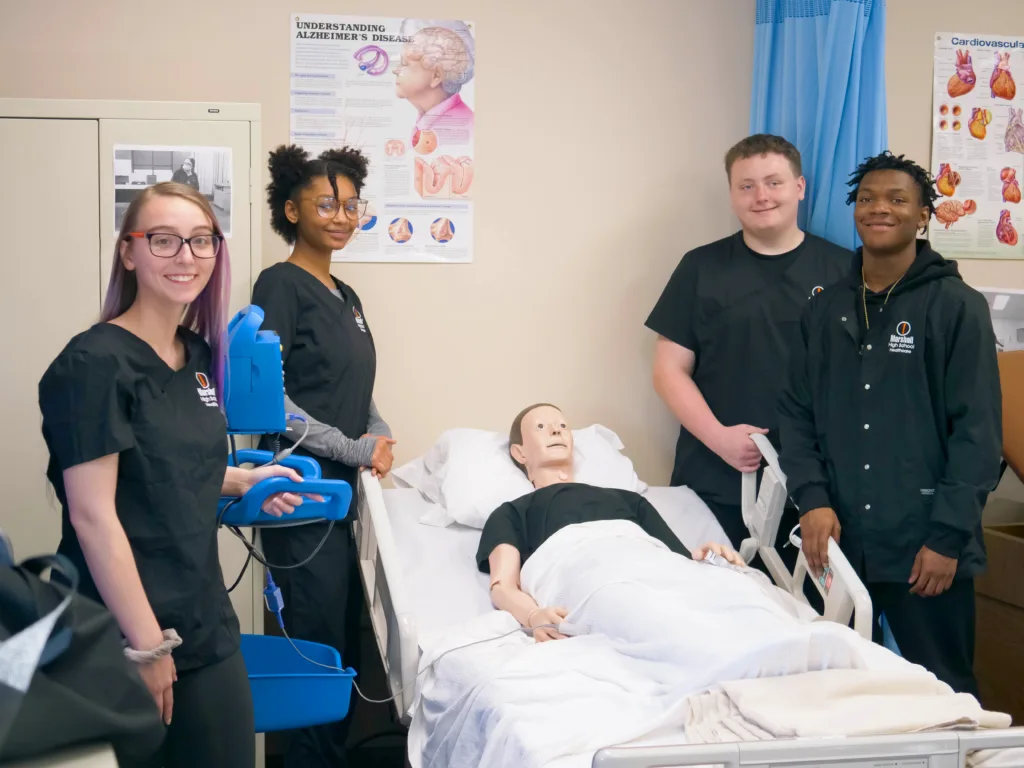
At Oakmont, positioning students for success involves a two-pronged approach that ensures participants have the credits needed to graduate as well as the requirements for certification in whatever fields they gravitate toward. Incoming students are introduced to the many vocational tracks available and given the opportunity to discover what speaks to them and aligns with their personal goals and dreams. They are specifically asked what they want to do, what dreams they carry, and what they believe will make them successful.
Oakmont also evaluates how many credits each student has and what will be needed to meet graduation requirements. From this information, an individualized plan is developed that takes into account each student’s circumstances, both academically and personally. Central to this approach is Oakmont’s willingness to be flexible. For these students whose lives rarely follow a predictable schedule, flexibility isn’t a courtesy; it’s a necessity.
This flexibility sometimes looks like classes that begin midday or take place online at varying times to meet students’ real-life situations. If a student is also a parent needing to get a child off to school, or works overnight shifts, classes with a 7:30 AM start time simply don’t work. These students need schedules that account for their actual lives. Flexibility may also mean shifting focus to address very practical needs first before any instruction begins. This may include providing a meal or even a place to rest. Ultimately, it’s about creating a safe space not just for learning, but also for simply being. At the heart of Oakmont’s ability to adapt to the individual needs of students is the adherence to one underlying principle emphasized by Randy: “Whatever it takes.”
Oakmont’s commitment to doing whatever it takes to meet the needs of its students involves the presence of family advocates assigned to each school, as well as powerful partnerships with community organizations and services, all of whom work collaboratively to remove barriers to learning. In a number of schools, social services agencies have full access to the campus, enabling Oakmont to connect students and their families to vital assistance. Whether the need is help with résumé writing and interviewing skills, preparing for certifications, or meeting basic needs such as clothing or even a meal, doing “whatever it takes” has made Oakmont a place of refuge and holistic transformation that encompasses and extends far beyond education.
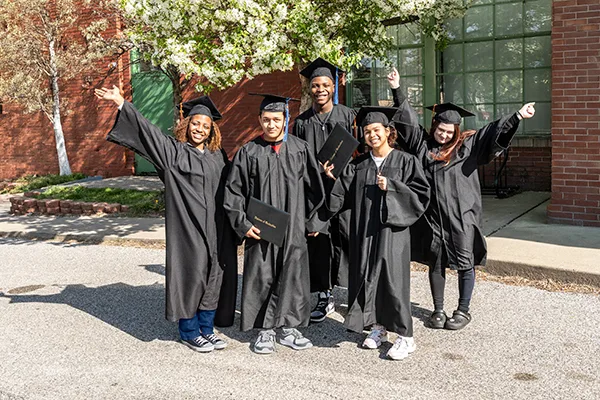
The results are undeniable. Last year, Oakmont graduated 1,100 students across its various schools, and the Class of 2026 is expected to be 1,200 strong. Oakmont operates with intentionality so that once a student graduates, that student is ready to walk into a trade or career, the military, or into college. With an 85% placement rate, Oakmont is doing just that. Moreover, 97% of the students who graduate from Oakmont do so with some form of career technical certification. This translates directly into workforce marketability, and the numbers once associated with dropout rates are shifting to become numbers that contribute to the overall health and economy of the surrounding community and nation.
The quiet population that rarely makes headlines is changing thanks to Oakmont Education and programs like it. By choosing to pursue students who have left the system rather than writing them off as another statistic, by intentionally working toward meeting the needs of these students, by asking, “How can I help?” and meaning it, Oakmont has created an environment of success that extends beyond the individual. Their work is transforming lives and, in the process, impacting and elevating the community workforce and contributing to the economic well-being of all.