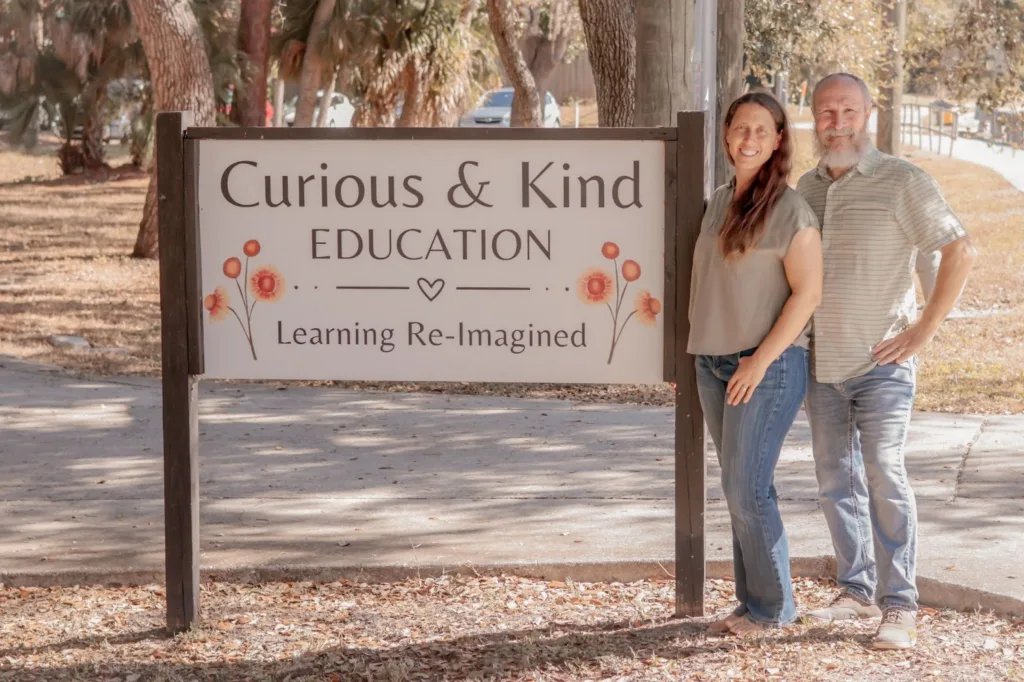
Every family hopes to find educators who really understand their child: those who don’t try to fix, mold, or standardize them, but instead see, accept, and celebrate them exactly as they are. I know how transformational that kind of presence can be. For many children, it is the first moment they feel truly safe to learn, explore, and grow.
Curious and Kind Education was built for children to have that feeling in our program. And honestly, I wanted to feel that way too!
A Career in Education and the Moment Everything Shifted
For nearly two decades, I worked in conventional schools, public and private, in the US and abroad as a teacher and principal. I loved the children, loved the educators, and believed deeply in the promise of education. But I couldn’t ignore what I saw every day: a system designed for efficiency, not humanity.
I watched children try to squeeze themselves into structures that didn’t fit. I watched brilliant neurodivergent minds labeled as having “behavior problems.” I watched teachers struggle to support 30 unique humans in a system that gave them almost no room to innovate or be themselves.
When I finally paused long enough to align my head and my heart, a question emerged: What if school could be designed around children instead of systems?
I took time away from the conventional system to deschool, learn on my own terms, and reflect. In May 2023, I took that seed of an idea and planted it, piloting my ideas. My vision was to blend the Forest School model with the Agile Learning Center approach. I intentionally paired the power of nature with the trust of self-directed education. That seed became Curious and Kind Education.
In August of 2024, I launched with 16 children across 2 programs. Today, we are a thriving learning community serving more than 100 children across 4 programs and summer camps. What began as an idea became a movement, so much so that my husband eventually left his high school teaching career to join us full-time. This choice allowed Curious and Kind to grow and be sustainable for our family.
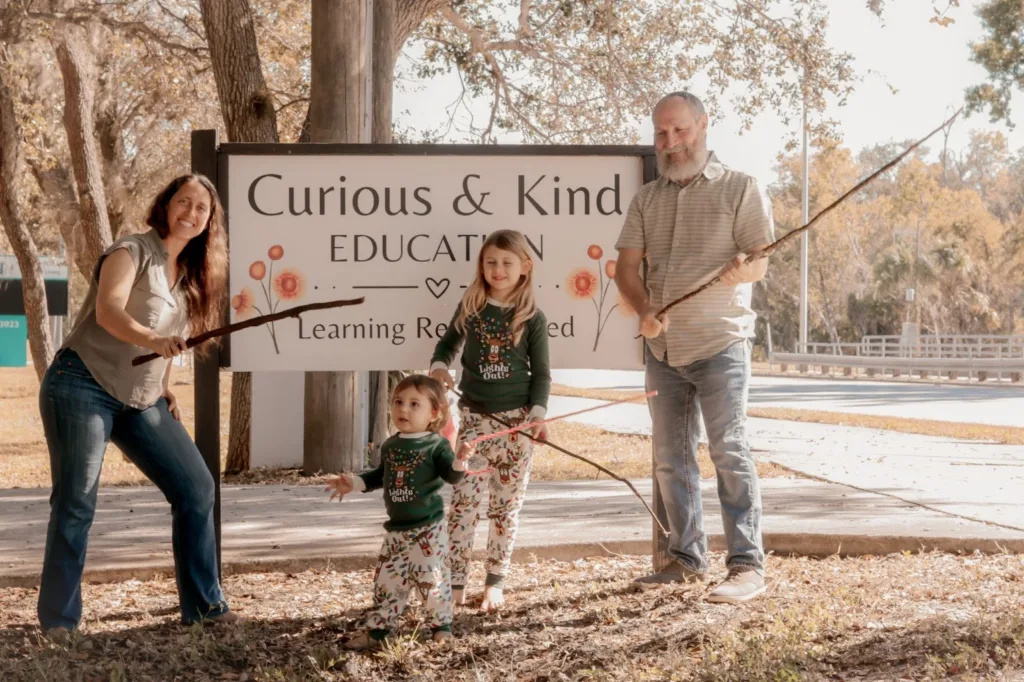
What I Built: A Microschool Rooted in Trust, Autonomy, and Human Connection
Curious and Kind was intentionally designed around a simple but radical belief: Children learn best when they are trusted.
Our model centers on deep relationships, autonomy, and an assets-based approach to childhood. Instead of asking how we can get children to comply, we ask: What do they need to thrive? How can we support them in their play and with what they are learning?
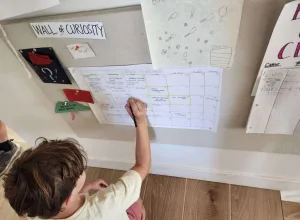
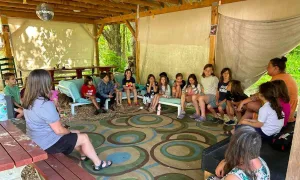
In conventional schools, adults make almost every decision: when a child can drink water, use the bathroom, read a book, move their body, or ask a question. At Curious and Kind, children get to choose how they spend their day, and it is through play! They build boats to float down the creek, create forts, care for animals, negotiate group games, climb, dig, design, draw, and experiment. In the process, they build the foundational skills all humans need: emotional resilience, critical thinking, creativity, collaboration, and self-knowledge. Curious and Kind is a place for children to learn about themselves, others, and the world around them on their own terms, authentically.
I designed Curious and Kind to be built on relationships, not policies. This makes it possible to look a child in the eye and see them, not their test score or grade level.
What I Learned: Freedom Reveals Children’s Brilliance
I always knew the conventional system wasn’t meeting every child’s needs. What I didn’t realize was how much harm it caused children who simply could not conform. Many neurodivergent learners weren’t struggling academically. They were struggling under the weight of expectations that ignored their wiring.
When children are free to learn through play, curiosity, and real-life problem-solving, their confidence, mental health, and sense of identity soar. Academics emerge naturally: physics in creek-boat engineering, literacy in storytelling under the oak trees, mathematics in fort design and cooking projects.
But the most profound learning I witnessed wasn’t academic at all; it was social–emotional.
Self-directed communities surface the real work of being human: sharing space, negotiating needs, repairing ruptures, and navigating conflict. Our facilitators are trained to hold each child with deep respect, offering co-regulation, communication tools, and emotional safety. This “secret sauce” is what makes Curious and Kind unlike any educational space I’ve ever seen because we prioritize connection over compliance.
I didn’t realize I was creating a place for social–emotional learning. Now, I know that is what we do best and with intention.
Conclusion: A New Future for Children and for Education
Children deserve autonomy, choice, and loving relationships. They deserve learning environments that honor their bodies, minds, identities, and rhythms. The educational landscape is shifting, especially in Florida, where school-choice policies have opened the door for families and educators to design programs for children and their diverse needs and desires.
Curious and Kind is proof of what can happen when we trust children and trust ourselves enough to reimagine what education can be. This has been my journey!
To parents, I say: try it… your child will show you the way. Trust the process (and yourself!).
To educators, I say: build the program of your dreams. The world needs what you’re imagining, and you aren’t alone. There are many of us out here building!
This is not just a microschool movement. It is a movement toward humanity, toward possibility, and toward a future where every child gets to grow in the way they were meant to grow.