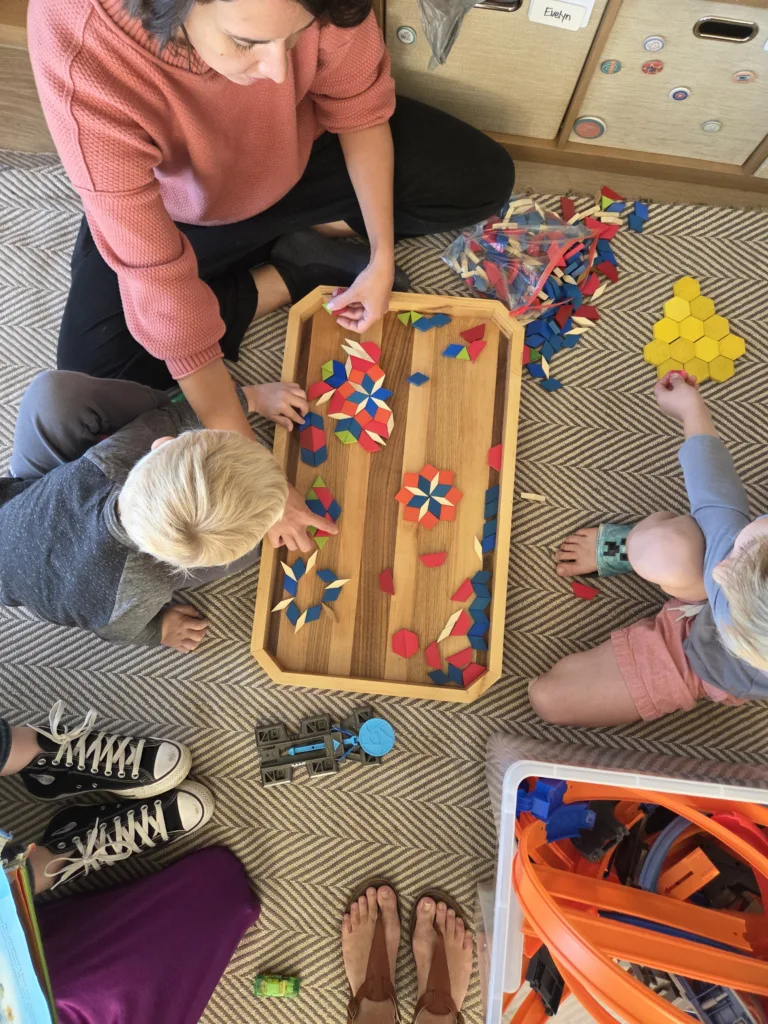
It was Thursday night, and I had three separate emails in my drafts folder. One was to our microschool parents announcing our move from my home into a new, larger, commercial venue. The second was an explanation, also to our current families, of our decision to stay small while we navigate the changing landscape of microschools and state funding options. The third email was still in process. I was sitting at a crossroads, and I didn’t actually feel settled on either option.
My husband and I were in our second year running our microschool, and the 2026 legislative session, combined with challenges we were already facing insuring our home-based school, had put us on an emotional roller coaster for months. However, in a matter of two weeks, we had gone through the process of making an offer on our first commercial lease, losing out on it to a better offer, learning of changes to our state’s education savings account (ESA) that could fundamentally change the feasibility of our current program, and finally having the commercial property become available to us again.
As legislators continued to discuss the new laws to govern Utah Fits All, a scholarship that the majority of our families use to pay their tuition, we considered a variety of major shifts to our program, including moving from 3 days to 5 days, getting accredited as a full private school, or scaling back intentionally to a homeschool support program. We were redesigning for shifting regulations, all while also deciding whether or not it made financial sense to commit to a three-year lease—a decision that would ultimately necessitate our growing the school from 25 students to at least 40.
In all, the Utah Fits All clean-up bill went through five different iterations before it was passed. Now I know why the attendant says to remain seated and buckled until the ride comes to a complete stop.
As I worked on that third email, the third possible iteration of our school for next fall, I felt pressure to make a decision that would disappoint the least amount of our current families—and to make it fast. I told myself, if you choose to grow, you must not miss the window to recruit new families by spring break. If you scale back, you must inform current families now, so that they can make new plans for next fall if needed.
Our enrollment had doubled after our first year. Demand felt like success, so we ran with it, but it had really changed the nature of my work. I operated more as a director, employer, and business owner, and less like an educator. Now it felt like regulations were pushing us to choose between further growth or intentional scaling back. The underlying tension was the fact that our growth had become so time-consuming that, financially, our family had all our eggs in this basket. The school had become our primary source of income. I was feeling the emotional drain of having my calling become a company, and considering making the company even bigger.
I paused. I took a breath and started asking some important questions. I had been surveying stakeholders all along—my students, parents of my students, potential families, fellow homeschoolers, my own kids, my husband, the government and ESA managers, my insurance agent. I had a lot of voices in my head.
Then, one conversation changed everything. I learned that some of my families were already considering changes: moving out of state, transitioning to public school, or needing additional childcare. I realized that the one constant in this school will be me—and if I don’t love running it, it will never last.
So I started asking myself some questions:
- If half your students made other choices next year, would you want to replace them?
- If all of the regulations went away, would you still build in the direction you are headed?
- Is this growth expanding my joy or just my workload?
- If I were starting the school from scratch now, is this the version I would build?
- Are you solving a mission problem or just a compliance problem?
Obviously, if you rely on a business for your main income, you don’t always have the freedom to ignore market demands, shifting regulations, or access to financial aid. But I found that by asking those questions, I was able to get back in the driver’s seat. From there, I could see what work was life-giving for me, what pieces were truly negotiable, and new ways to structure my offering that felt financially feasible and still aligned with my personal bandwidth.
Friday morning, I sent two emails. One was to our real estate agent letting him know that we had decided not to go forward with the lease. I felt a huge relief. The second was to our families. We told them honestly and openly of the changes we are navigating. We shared how much we love working with their kids. And then we explained what we do know about next fall, and that more information will be coming. I gave myself space to build intentionally and sustainably. Some families may choose other options because they need to plan now, and some are okay waiting.
And the biggest irony: the final version of the Utah Fits All bill has removed all the new language that would have affected our program. I am learning that there will always be shifting tides, but at least next year, I will remain seated until the ride comes to a complete stop.