When the state fire marshal called in the early days of running my microschool, I wasn’t sure what to think. We had worked closely with our local fire department and town government. Our learning center had been inspected, approved, and operating successfully for years. I had no reason to think that there was another layer of oversight that we had not navigated yet. I wondered what would trigger this new round of scrutiny? Was this a legitimate regulatory issue, or overreach?
As a former wildland firefighter, I had spent years assessing structures, studying fire behavior, and making the hard decisions on which buildings we were likely to save and which ones we might have to walk away from. A general fire inspection did not intimidate me.
However, I realized that I didn’t know enough to determine whether this fire marshal inquiry was legitimate or not.
Then the inspection revealed that this was about educational occupancy, not fire safety.
The fire marshal’s finding nearly cost us everything. Our learning center couldn’t move forward with a lease renewal. We couldn’t book vendors for our summer programs, or market our upcoming founders’ retreat. We didn’t even know if we could finalize enrollment for next semester. I hadn’t anticipated that tutoring the three Rs could trigger an entirely new level of regulations. Unfortunately, I hear some version of this story regularly from the founders I coach.
When founders start education businesses, the conversations revolve around the learners. Founders focus on curriculum, culture, families, vision, and mission. Then months, and sometimes years, later, the questions shift to different concerns.
“Do I need a business license?” “Where do I get insurance?” “How do I know who has jurisdiction?” and, eventually, “Do you know a good lawyer?”
Many founders willingly invest hundreds of hours learning about child development, curriculum, and how to build a learning community culture. What many don’t anticipate is that bringing that vision to life also requires understanding lease agreements, zoning, employment law, insurance, building codes, and a host of other regulations that have little to do with education and everything to do with operating a successful education business.
Building a successful learning community requires far more than understanding how children learn. The challenge isn’t a lack of vision or commitment to compliance. It’s the breadth of knowledge required to turn that vision into reality.
One of the clearest signs that the education entrepreneurship movement is maturing isn’t that more founders are finding the courage to build new learning environments. It’s that organizations are emerging to help these founders succeed and their programs to prosper.
Over the last few years, I have begun to see a pattern that reminds me of my homeschooling journey. People aren’t just solving these problems for themselves. They are sharing what they have learned with others. Mentors answer late-night emails to offer support. Long-time operators share their hard-won experience at conferences and on podcasts. Founder groups connect newcomers to resources, networks, and coaches.
This is what healthy communities do: they pass along knowledge that enables others to blossom.
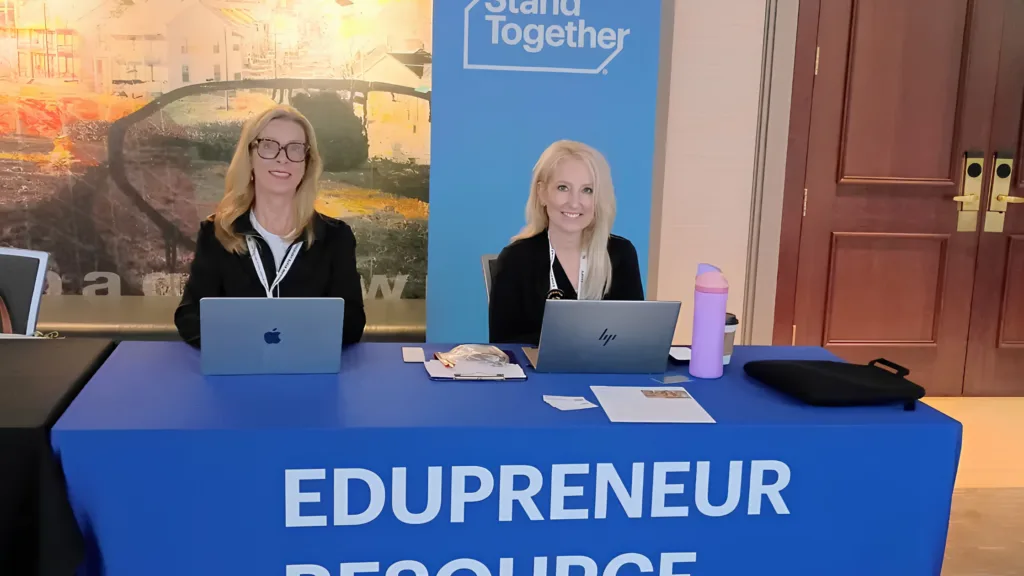
I recently had the opportunity to interview Lynn Swanson, Chief Counsel for Education at Stand Together, when I guest hosted Kerry McDonald’s LiberatED Podcast.
I asked Lynn what drove Stand Together to develop the Edupreneur Resource Center (ERC). Her answer reinforced what I had been seeing in my own work with education entrepreneurs.
As innovative learning environments began emerging across the country, many edupreneurs found themselves trying to navigate a legal and regulatory landscape they had never encountered before. Lynn explained that the ERC grew out of the recognition that this complexity had become “a barrier to the growth of a vibrant marketplace of education alternatives for families.”
The ERC was designed with two purposes in mind: helping founders understand the regulatory landscape in which they operate, and supporting education entrepreneurs when they face regulatory overreach or intervention.
One of the most enlightening insights Lynn shared was that perfect compliance is very hard to achieve. Regulations overlap, agencies have different jurisdictions, codes change, and interpretations can vary. Lynn also said, “Don’t assume you are wrong.” Develop enough understanding to ask informed questions, document decisions, and know when to seek guidance.
The ERC offers micro-courses, state-specific compliance guides, practical checklists, and personalized guidance. Most importantly, the ERC helps founders navigate a complex regulatory landscape with greater confidence.
Healthy ecosystems don’t simply produce entrepreneurs. They produce knowledge, relationships, and support systems that help entrepreneurs to flourish.
Looking back, the lesson learned isn’t how to prepare for a fire inspection. It’s how a knowledge gap could grow to an existential crisis and threaten everything we’ve built.
Baker Creek Academy wasn’t just my business. It was the learning community our families had intentionally chosen as an alternative to the traditional system. If I failed to understand the regulations that govern our program, families could lose the alternative they trusted me to provide.
I realized that my responsibility extended beyond the learners I guide and the founders I lead. I had a duty to understand the regulatory terrain well enough to protect the learning community we had built.
Founders don’t have the luxury of remaining experts only in education. Families are not only trusting us with their children, but with building stable and sustainable programs that they can count on. We must become good stewards of not only our mission and vision, but the programs we built to serve them.
The ERC is significant because it helps create the conditions where educational freedom can flourish. Through shared knowledge, guidance, and support, founders are building environments that are both innovative and sustainable. Importantly, the ERC is strengthening the broader ecosystem by making it easier for the next generation of edupreneurs to serve families with confidence.
Education pluralism depends on more than courageous founders. It depends on experienced founders, mentors, and organizations willing to invest their knowledge so that others can thrive.