One year ago, Kerry McDonald interviewed Emma Rodriguez on the LiberatED Podcast as Emma prepared for her first full year operating Lighthouse Christian Academy, a K–8 faith-based microschool in Frisco, Texas. At the time, Emma was excited to be starting the year with 7 learners. She had begun the previous spring semester with just 2. Just one year later, Lighthouse has grown to 20 learners and added 2 teachers.
The growth is impressive, but this isn’t the whole of Emma’s or Lighthouse Christian Academy’s story. I had the opportunity to lead a follow-up interview with Emma on last week’s LiberatED Podcast.
In our conversation, Emma described one learner who came to Lighthouse after struggling in his previous traditional educational environment. He was frequently in trouble, and his mother was looking for a more personalized environment where he could feel seen and connected to his education.
Emma, a certified former public school teacher with nearly a decade of experience in the classroom, knew that supporting this learner would not always be easy. She worked closely with his parents, focused on what he needed, and gave him the space to build relationships in Lighthouse’s small, mixed-age environment.
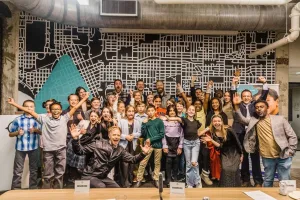
The following spring, a group of aspiring microschool founders toured Emma’s campus. One of the visitors recognized the learner from his former school, where she had previously substituted. She pulled Emma aside with tears in her eyes. “That is not the same kid that I used to know,” she confided in Emma. “He is happy and full of joy, and you can tell that he loves being here.”
Emma had already noted his growth. Having someone from outside Lighthouse recognize the difference was further confirmation. She founded Lighthouse Christian Academy with a purpose. Her vision of small class sizes and close relationships is evident in the daily experiences for learners and their families. Student–teacher ratios are small, ensuring that each child who needs additional attention can receive it. Each learner works at his own pace and skill level, mastering the lesson before moving on. “Everybody’s just working on what they need, and we’re cheering on everybody no matter what,” Emma explained.
The learners weren’t the only ones who grew during Lighthouse’s first full year of operations. Emma became a microschool founder after leaving the conventional education system, and she admits that some traditional habits and expectations followed her. “I was really stuck in my public school teacher ways,” she said of one struggle she encountered.
She worried about covering every standard and making sure that learners received every piece of content assigned to a particular grade level. Over the course of the year, she began questioning whether racing through more material was actually producing more learning. “If we cram and cram and cram information at kids, they’re not learning it,” Emma said. Instead, she is choosing to focus on the important ideas of a topic, to slow down, go deeper, and focus on making learning more meaningful. This, she discovered, improves outcomes for her students.
This evolution hasn’t meant abandoning quality or rigor. It has meant reconsidering what meaningful learning looks like and demystifying for parents how an unconventional educational path can prepare their children for high school, college, and a rewarding life beyond Lighthouse.
Emma’s expectations for the upcoming year reflect her commitment to learning from experience. After offering both two- and four-day programs, she decided to embrace her vision more fully and run only a four-day model. Initially, she was pulled to respond to parents who wanted a part-time option, but the feedback from learners was that they wanted to be there more, not less!
Lighthouse Christian Academy’s first year came with many challenges and exciting opportunities. Launching an unconventional education program isn’t only about having the courage to say yes. It also requires having the fortitude to reconsider former practices and beliefs, and to make decisions that protect your vision.
A year ago, Emma welcomed a handful of learners to Lighthouse. Today, she is leading a growing learning community, challenging conventional methods of teaching, and, most importantly, changing how families and their learners experience education.