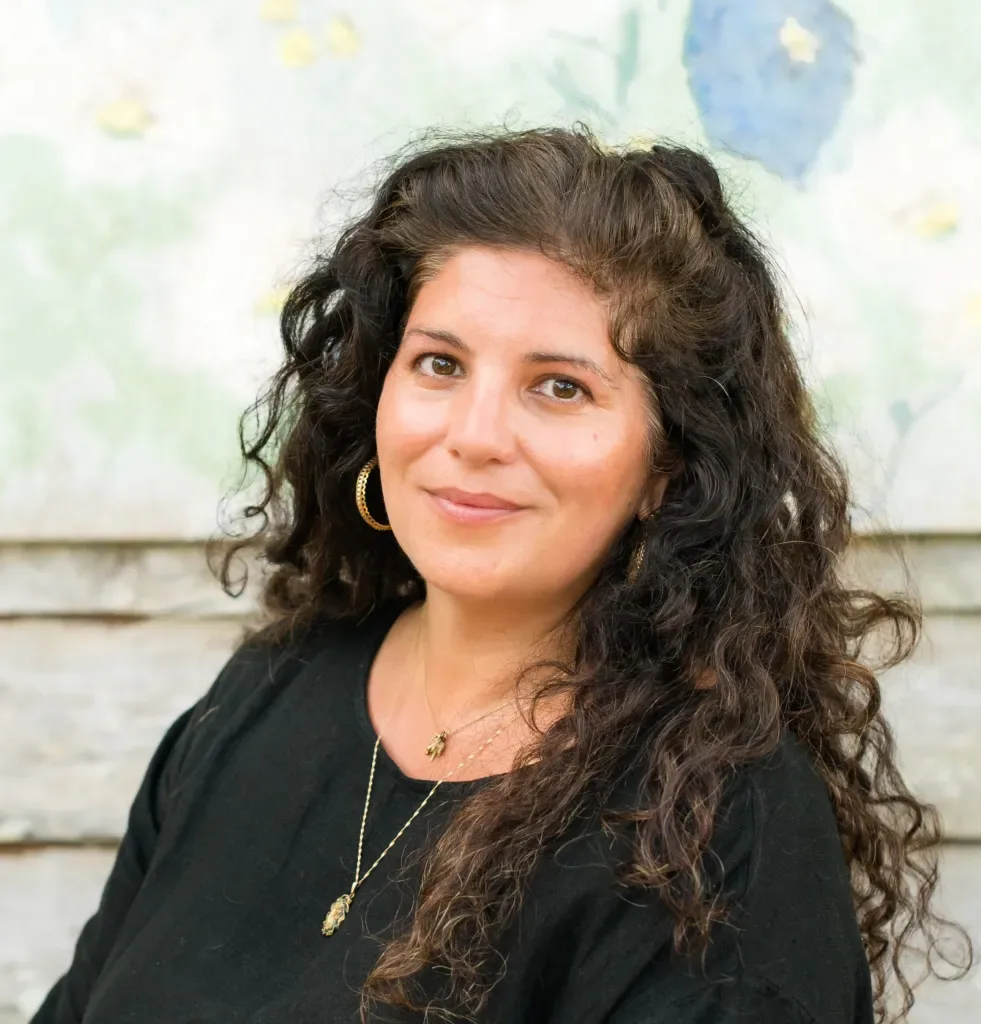
Tara Famularo-Del Bianco didn’t plan on starting school or a church, but she has recently done both. An attorney who spent nearly 15 years representing abused and neglected children in New York City family court, Famularo-Del Bianco moved to Vero Beach, Florida in 2021 with her husband and two children, who were in the first and fifth grades. Her work and her children’s private Montessori school went remote during the Covid-19 pandemic, and the family decided to head south. Upon arriving, Famularo-Del Bianco couldn’t find a school for her kids that she liked, so she began homeschooling them while earning her Montessori educator certification.
Like so many of today’s education entrepreneurs, Famularo-Del Bianco’s experience with homeschooling and other alternatives to conventional schooling during the pandemic ultimately led her to launch her own microschool for homeschoolers.
Last February, that microschool was serving 50 students up to four days a week in a leased church space. Her program was flourishing, until someone called the Florida Department of Children and Family Services (DCFS) to complain that Famularo-Del Bianco was running an illegal school. That set off a cascade of events involving both DCFS and the Florida Department of Education, with the former agency allegedly suggesting that the microschool should become licensed as a child care center—even though it doesn’t serve young children—and the latter agency purportedly suggesting that the microschool should become a state-recognized private school—even though it serves homeschooling families.
I reached out to both the Florida Department of Children and Family Services and Florida Department of Education for comment but have not heard back.
Famularo-Del Bianco didn’t agree with the requirements involved with becoming a licensed child care provider, such as using chemical cleaners like bleach, which ran counter to the microschool’s non-toxic wellness approach. She also didn’t want to run her microschool as a private school because she believed that it would reduce family autonomy and create a different educational dynamic than the one she was cultivating with homeschooling families.
“I was either being cornered into being a daycare or a private school,” Famularo-Del Bianco told me. “The attorney in me was looking for some definition, and within the State of Florida it’s unclear. I was in this gray zone that didn’t really have a definition,” she said, adding that both state agencies were unsure about the type of program Famularo-Del Bianco was running and how it should be regulated. “They were literally saying you have to redefine yourself into one of our boxes,” said Famularo-Del Bianco, who closed her program last winter in the wake of the agency investigations.
Today’s emerging schooling models, such as microschools and hybrid homeschooling programs, often don’t fit neatly into existing regulatory boxes. They typically exist somewhere in between traditional schooling and traditional homeschooling, adopting innovative educational approaches that prioritize individualized learning, flexibility in curriculum and scheduling, and deep partnerships with families.
“Unlike many states, Florida does not distinguish educational programs from child care and very limited exemptions from licensure requirements exist,” said Lynn Swanson, chief counsel, education, at the Stand Together Edupreneur Resource Center, where she works closely with current and aspiring microschool founders.
With her microschool shuttered, Famularo-Del Bianco began to feel that Florida’s existing regulatory framework was compromising her constitutional rights. “One of my main focuses in law school was constitutional law. It’s something I’m very passionate about,” she said. “As I was learning about all the requirements, every fiber of my being was saying that this is against everything I believe in.” She believed firmly in living a natural, holistic life, as well as in the natural rights of parents to raise and educate their children. “I believe that God has given me the right to have this way of living and I felt like my First Amendment right was being infringed upon,” said Famularo-Del Bianco, who was raised Catholic in New York.
She discovered that if her microschool was affiliated with a church, then she could get a religious exemption from Florida’s DCFS and Department of Education requirements. So Famularo-Del Bianco set out to create a church that fully reflects her closely-held beliefs around living and learning.
In August, House of Natural Living gained official recognition as a church in the State of Florida. Shortly thereafter, Famularo-Del Bianco opened The Magnolia Schoolhouse, a new K-8 secular, Montessori-inspired microschool focused around wellness, family, and a natural, joyful approach to childhood learning and development. There are currently 75 students enrolled in the microschool, which is a project of House of Natural Living, as well as growing membership in the new church.
“Establishing a church as a home for an educational program eliminated the need for a child care license but the approach has its own obligations which are not insignificant,” said Swanson, who met with Famularo-Del Bianco several times over the past year. “It won’t be feasible for everyone. I greatly respect the way Tara approached the challenge. She spent a lot of time researching requirements, seeking appropriate professional guidance, creating the church and its doctrine, documenting compliance, managing a membership agency, and dealing with regulators.”
Famularo-Del Bianco agrees that starting a church should not be entered into lightly. She adds that running both a new church and a new school is quite challenging, but she encourages others to consider the opportunity. “I think if you have firmly held beliefs that you want to continue to grow and practice and build your community, which is exactly what church is—a community of people with like-minded beliefs with an element of spirituality, whatever that is, for whatever religion you practice—I think I would recommend it because there’s a sudden freedom that comes with it and a community that you build,” she said.