Earlier this month, a friend alerted me to New Jersey’s bill A-5796, which was scheduled for a vote on January 5th. This bill would have required homeschool parents to meet annually with a designated representative from the school district, in part to “conduct a general health and wellness check of the child.” Among the concerns with this bill was the absence of any parental protections, as parents could be separated from their children during questioning. Within two days, the bill was withdrawn, never coming to a vote, due to an overwhelming response from the New Jersey homeschooling community.
As I reflected on what happened in New Jersey, three thoughts came to mind. First, I was reminded that there will always be challenges, either direct or inadvertent, to parents’ freedom to educate their children in the way they believe is best. Next, the fates of these challenges are almost always connected to the level of parental engagement on the issues in question. For homeschoolers, engagement is high. Finally, an inverse relationship is trending between restrictions on homeschooling in states that embrace and expand educational choice.
The bill presented by the New Jersey legislature and those like it in other states are nothing new. From time to time, lawmakers will present bills that on their face appear to be benign attempts to help homeschooled children, but at their core, often challenge parental rights. Rarely are these bills targeted attacks on homeschoolers. Far more often, these bills are presented by well-intentioned lawmakers who, in their zeal to correct a perceived problem, overstep their authority. This was the case in New Jersey.
The first part of the New Jersey bill, and others like it, appears to help administrators answer the questions “Where are the kids?” and “What are they doing?” These are understandable questions, given that in many states, public school funding is tied to student enrollment numbers. However, the inclusion of a “general health and wellness check” goes beyond the scope of education. With no parental protections written into the bill, there were legitimate concerns regarding government overreach, especially since no other state requires wellness checks for its students, and homeschoolers would be the only group of students subject to this requirement.
Thanks in large part to strong grassroots support, the New Jersey bill was pulled and never reached a vote. In nearly every state, organizations that monitor legislative activity and alert local communities of possible threats to homeschooling and educational freedom are very active, and whenever these alerts have been sounded, homeschoolers and the unconventional learning community are quick to respond. National organizations such as Home School Legal Defense Association (HSLDA) are at the forefront of this activity, and together with state and national partners, they successfully mobilize the unconventional educational community to respond to potential challenges to educational freedom.
In 2025, Illinois families successfully halted efforts to pass House Bill 2827, the Homeschool Act, which would have tightened existing homeschool regulations by requiring parents to register/notify their local districts of their homeschooling, imposed minimum education requirements for homeschooling parents, and allowed authorities to request proof of curriculum or student work if concerns arose. Homeschooling advocates overwhelmingly responded to calls for action amid concerns surrounding parental rights, religious freedom, and the potential for criminalizing families who failed to comply.
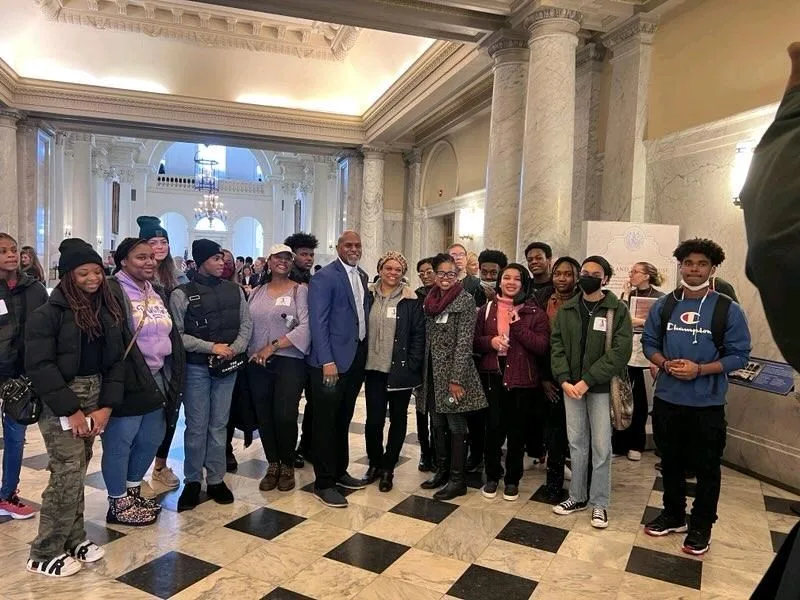
This past year, when Connecticut drafted legislation to tighten homeschooling laws, the robust response from that state’s homeschool community, which included assembling at the State Capitol, resulted in the stalling of those efforts and the disbanding of a subsequent legislative working group. In my home state of Maryland, the announcement of the State Department of Education’s periodic review of homeschooling laws mobilized homeschoolers across my state to contact lawmakers, voicing concerns over any changes to the existing laws, asking that the current regulations remain unchanged.
This is the hallmark of families in the unconventional learning space. We are fiercely protective of our right to educate our children as we see fit. While we understand that things can go wrong, the reality is that the potential for wrongdoing exists everywhere, and the proper response is not to punish an entire group of people for the failings of a few outliers. When challenges and perceived threats to freedom come, homeschoolers typically reply swiftly and en masse, resulting in the preservation of these rights.
Looking around the country, as homeschooling continues to grow beyond pre-pandemic and pandemic levels, what I’ve noticed and been encouraged by is a trend toward deregulation, especially in those states that have embraced educational choice. This is in stark contrast to what I had come to believe in 21 years and counting of homeschooling. For years, I falsely assumed that the expansion of school choice through ESAs, tax credits, and similar legislation would encroach on my homeschooling freedom, and feared increased regulation stemming from these choice measures. However, none of that is true.
In a study conducted by Dr. Angela Watson of the Johns Hopkins University School of Education and Jeremy Newman of the Texas Home School Coalition, the data demonstrates that as school choice and ESA availability rise, not only is homeschooling not negatively impacted, but homeschool regulations actually decrease. That report states, “We find that increased homeschool student access to local public school offerings does not appear to have negatively impacted homeschool policy. We also find no evidence that public funding of private school choice has impacted homeschool policy. Indeed, we find that overall, homeschool regulation has decreased over time.”
Moreover, these findings were further demonstrated in an article by Kerry McDonald, where she noted that “states with the strictest regulation of homeschooling have no private school-choice policies or general policies that allow homeschoolers to participate in public school programs, while states with these expansive policies often have the least amount of homeschooling regulation.” Her article pointed to states such as Florida, Arizona, Utah, where there are minimal homeschooling regulations, and also Wyoming, where homeschooling was deregulated just prior to enacting universal choice. In these states where school choice abounds, homeschoolers are experiencing more freedom, and more resources are available to homeschoolers.
However, some of the most heavily regulated states, such as New York and Massachusetts, lack full access to school choice. My home state of Maryland is considered by some to be among the more restrictive states for homeschooling, and here, school choice is minimal, at best. We have no ESAs, we have no tax credits, and there’s nothing on the horizon.
The pattern is becoming difficult to ignore. Where families are trusted with real educational options, homeschooling flourishes with fewer restrictions; where choice is constrained, regulation often follows. The recent battles in New Jersey, Illinois, Connecticut, and Maryland are reminders that parental rights and educational freedom are never permanently secured; they are preserved through vigilance, engagement, and collective action. Yet there is reason for optimism. As educational choice expands across the country, it is not eroding homeschooling freedom as once feared, but strengthening it. The future of education belongs not to rigid systems, but to empowered families who remain watchful, involved, and unafraid to defend both their children and their freedom to educate them well.