Thinking of the college application process, what words come to mind? Frenetic? Anxiety-ridden? Exasperating? Exhausting? For many families, this experience can resemble a three-ring circus, with students and families juggling essays, letters of recommendation, testing, deadlines, campus visits, financial aid, and the agonizing waiting game for admission decisions. However, what if there was a better way? What if there were a systematic way to navigate this process calmly and confidently? The great news is that there is!
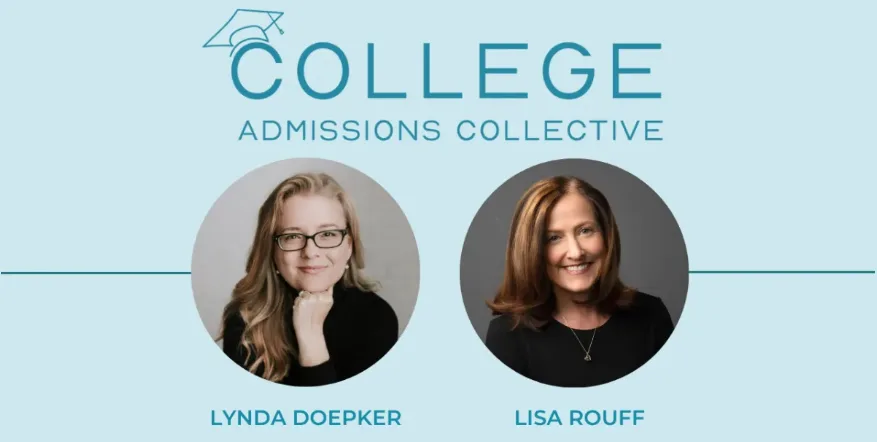
I had the opportunity to interview Dr. Lisa Rouff and Lynda Doepker, authors of The Calm College Method: A Stress-Free Guide to College Admissions for Parents and Students. As I read their book, I discovered a much-needed answer for the many parents I encounter, both within the homeschool community and in the traditional educational world. Born from the authors’ experiences working with their own children and working with other families navigating college admissions, this book provides practical advice and actionable strategies that radically change how the college application process is viewed and undertaken. At the heart of their method is a fundamental change in thinking, a paradigm shift from outcome-oriented to process-oriented.
Families typically begin the college admissions journey with the outcome in mind, and that’s a good thing when dealing with generalized, predictable outcomes. However, the college process is often anything but predictable, as the authors remind us early on. “No matter how perfectly your child executes every step [of the application process], they cannot control institutional priorities, demographic shifts, or the thousands of other applicants in the pool,” the authors write. With an increasing number of colleges engaged in marketing strategies designed to boost their brand and lower acceptance rates, and students blanketing applications across countless institutions, the college admissions process has turned into a poorly run numbers game. Hence, the need for a different approach.
Focusing on process-orientation, the Calm College Method redirects attention away from gaining admission to any specific institution and toward actionable steps and measurable benchmarks of activities, so that both students and families can experience “wins” all along the way. This method is genuinely about the journey. For the authors, this process truly is about the journey, which involves taking steps that are well within the student’s and family’s control. With every achieved goal, students build confidence and are able to enjoy the process with minimal stress.
The Calm College Method begins with identifying colleges that best fit the student’s individual needs by assessing no fewer than 36 characteristics of the typical collegiate environment. This approach will feel familiar to those of us in the unconventional learning space, where crafting individualized educational programs to meet the unique needs of students is second-nature. This raises a compelling question: If a personalized approach has worked successfully up to this point, why should this strategy be abandoned simply because the student is graduating high school? Doesn’t it make sense to continue this method into higher education? Dr. Lisa Rouff and Lynda Doepker would respond with a resounding yes! Continue with this approach! Attending an institution with an environment that fits the student academically, socially, culturally, and financially matters. Once that is understood, a brand-new landscape of colleges opens up with far more opportunities to investigate which would have otherwise gone unnoticed. Now, students are in the driver’s seat, researching schools that match their criteria instead of the other way around. As has always been the case in education, finding the best fit for students leads to better outcomes, and in this case, makes for an empowered and far more enjoyable college application experience.
From there, students and families follow a sequence of steps supported with accompanying templates and extensive checklists to help stay organized. The College Research Planning Template captures information from the student’s best-fit assessment and provides a roadmap with resources for identifying colleges that meet the student’s requirements. The College Financial Planning Worksheet includes checklists for merit aid research, a strategy tracker, financial aid form checklists, and a “loan reality check,” all with accompanying resources to assist students and families as they plan for college costs. These are just some of the tools provided by the Calm College Method, making a previously intimidating process feel wholly achievable.
In Chapter 9, the same process-oriented approach is applied to the Common Application, the primary college admissions portal. “The Common Application represents dozens of small process goals bundled together. This is where the Calm College Method shines: by breaking the Common App into manageable, achievable tasks, you transform what feels overwhelming into a series of completable steps,” they write. Lisa and Lynda provide strategies and checklists to navigate both the activities section, as well as arguably one of the most daunting tasks on the Common App—the personal statement essay. The strategies and advice presented move students away from “trying to prove [they’re] ‘good enough’ for specific schools (outcome thinking)… [to] accurately representing who [they] are through a well-crafted story (process thinking).” It’s this paradigm shift, consistently presented throughout the book, that makes the Calm College Process so effective.
The final sections of the book provide checklists and strategies that can be introduced as early as middle school, with the more robust checklists and resources dedicated to each year of high school, with separate, dedicated chapters for the junior and senior years. Moreover, Lisa and Lynda acknowledge and address the emotional component of this journey and the need for both student and parent emotional wellness. Once again, they offer practical advice and strategies to navigate these years calmly and with everyone’s sanity intact.
Since connecting with Dr. Lisa Rouff and Lynda Doepker, I’ve had the opportunity to recommend The Calm College Method to high school parents and educational entrepreneurs as far away as Oregon. This book has earned a permanent place on my list of must-have resources for every parent, whether schooling traditionally or unconventionally, and for every educator and edupreneur serving middle and high school students. We’ve all seen parents and students reach the end of their proverbial ropes in the college application process. Thankfully, we now know of a better way: the Calm College Method.