In celebration of America’s 250th anniversary, we invited writers of all ages to share—in 250 words or less—what the freedom to learn means to them. We received stellar submissions from students, parents, teachers, and founders across the country, and are thrilled to spotlight the five winning essays below. Each winner receives a $250 Amazon gift card.
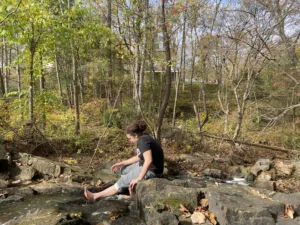
Being free to learn gives kids the chance to develop at their own pace and pursue their interests. My daughter said it best a few years ago: “Just because someone is teaching, doesn’t mean I’m learning.” It hit me hard because she verbalized something that we already know. Learning is not something that automatically happens because information is presented. Real learning happens when individuals are given space to explore ideas in ways that work for them. Educational freedom means giving children that space. For my family, it looks like morning walks talking about what’s around us and learning through conversations and experiences. It’s afternoons filled with freedom that no classroom could fully replicate—exploring new places, serving others, and experiencing people of all ages. It’s evenings creating, reading, and looking at stars. When kids are free to learn, the deeper lesson is often found in the process itself: learning to think independently, solve problems, and trust their own abilities—things that compulsory schooling doesn’t always have room for. Being free to learn allows interests to be pursued and opens windows for creativity and individuality to blossom. It means being free from predetermined outcomes, being measured against peers, and expectations that everyone should fit in the same mold. It gives families freedom to provide the education that meets individual needs by choosing a path that allows kids to flourish and grow in ways that suit who they are and what they want to accomplish in the future. That’s free to learn.
– Amber Brown, Tennessee
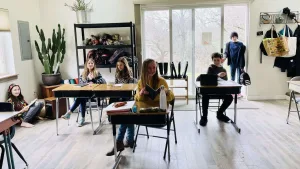
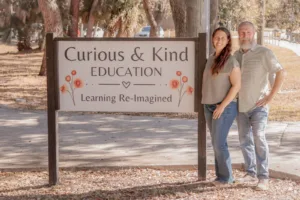
As a homeschool mom, the freedom to learn has meant the freedom to stop forcing something that wasn’t working for my kids and start building something that did. My children are bright, curious, and very social. But I struggled to find a space that felt right—somewhere safe, respectful, and nurturing where they could truly belong. I didn’t want endless worksheets or pressure to fit into a one-size-fits-all box. I wanted community. I wanted freedom for my kids to be kids—to play, explore, ask questions, build friendships, and love learning. When I couldn’t find what we needed, I helped create it. What started as a small idea for my own children turned into a nonprofit microschool community where families come together to learn, grow, and support one another. It gave my kids friendships, confidence, and a place where they feel safe and valued. It also gave me something I didn’t realize I needed too—other parents walking alongside us. To me, the freedom to learn means recognizing that children learn differently, families need different things, and community matters. It means having the freedom to say, “This isn’t working,” and the opportunity to create something better.
– Whitney Rainbolt, Indiana
Freedom to learn is deeply personal for me. As a parent, it means having the ability to recognize what my child truly needs and to seek it out, and if it doesn’t exist, it’s the freedom to build it. When my daughter’s learning environment was disrupted in 2020, I saw that something wasn’t working, not just for her, but for many kids around us. Instead of waiting for change, I teamed up with another mom to start a cottage school that focused on small class sizes and direct instruction. What began as a solution for my daughter quickly grew into something that served other families who were searching for the same kind of learning environment. What I’ve seen since then has only deepened that calling. As I continued listening to my community, I launched a second program to meet additional needs I saw emerging. Having the freedom to create a space that allows students to be met where they’re at, we can impact change by building confidence and a love of learning. We’ve seen such amazing growth in our students: overcoming anxiety and bridging gaps they thought would be too hard to close. That’s what freedom to learn looks like to me. It’s not just about options; it’s about being able to respond when you see a need, supporting other families, and creating spaces where all children are known, loved, and able to thrive. It’s those moments of seeing a child’s face light up when they get it.
– Marta MacBan, Arizona
The freedom to learn has shaped my life and work by showing me what’s possible when education meets relevance, ownership, and opportunity. I’ve seen firsthand how students—especially those from underserved communities—begin to transform when they are given the space to explore their ideas, connect learning to real-world problems, and build something that matters to them. In my community, many young people have been conditioned to see education as something they have to get through, not something that belongs to them. The freedom to learn disrupts that mindset. Through entrepreneurship, project-based learning, and exposure to emerging technologies, students begin to see themselves differently—not just as learners, but as creators, innovators, and problem-solvers. That shift is powerful. It builds confidence, purpose, and a sense of agency that extends far beyond the classroom. This freedom has also influenced how we design learning environments. Instead of rigid structures, we prioritize flexibility, creativity, and student voice. Families become partners, educators become facilitators, and students take ownership of their learning journeys. The result is deeper engagement and outcomes that are both academically and personally meaningful. For my family and community, the freedom to learn represents access: access to opportunities that were not always available, and the chance to redefine what success looks like. It is not just about choice; it is about transformation. When people are free to learn in ways that reflect who they are and who they want to become, they don’t just change their own trajectory; they uplift entire communities.
– Harold Lee, Oklahoma
In my rural community, educational freedom is breathing new life into learning opportunities. For years, families felt stuck with limited options and a distant district office that didn’t understand local needs. When education savings accounts and other choice policies became available, new microschools, co-ops, and hybrid programs began to emerge. Parents who once felt powerless now collaborate directly with teachers and entrepreneurs to create innovative programs tailored to our agricultural lifestyle and community values. I’ve watched shy students blossom in small, project-based settings and gifted kids accelerate without being held back by grade levels. A neighbor’s daughter, passionate about sustainable farming, now spends part of her week learning agricultural science through real fieldwork. Educational freedom has reduced conflict between families and the old system while creating a vibrant ecosystem where different approaches coexist and compete. This healthy competition is raising quality for everyone. My community proves that when parents and educators have freedom, children don’t just survive school; they thrive with purpose. The results are visible: higher engagement, stronger families, and young people who feel ownership over their education. Educational freedom has reshaped our town by respecting individual differences and local context. It reminds us that learning works best when it’s human-centered rather than bureaucratic. I’m grateful to live in a place where this shift is happening, and I hope more communities gain these same opportunities in the years ahead.
– Campbell Ornell, Georgia