Like many microschool founders, Tawnee Johnson didn’t set out to establish a new institution. She was homeschooling her daughters, helping educate her niece and nephew, and looking for opportunities that enriched their experience. This pursuit eventually led to the establishment of the Tonto Apache Community School, the first school established by the tribe on its reservation.
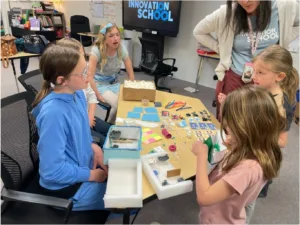
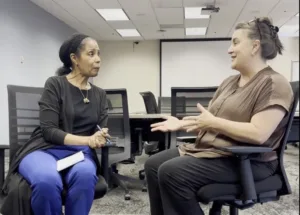
While completing her education degree at Grand Canyon University, Johnson discovered Prenda, an Arizona-based microschool organization. In January 2021, she opened with eight learners. Interest grew quickly, but operating under Prenda’s then-charter partner meant enrollment limits that required separate morning and afternoon sessions. Johnson soon began exploring how the community could establish a school of its own. The Tonto Apache Tribe, federally recognized in 1972, had never operated a school on the reservation. Working with tribal leadership and attorneys, Johnson helped establish the legal framework for a nonprofit school under tribal law. The Tonto Apache Community School was formally established in 2023. “That’s really what we’re aiming for, is that educational sovereignty,” Johnson explained when I interviewed her on the LiberatED Podcast.
The tribe’s leadership did more than establish another educational institution. By exercising its sovereignty to create a school under tribal law, it made possible an educational option shaped by the community it was created to serve. Johnson could create a learning environment responsive to the learners, while families retained the freedom to decide whether it met their needs. Rather than competing with individual autonomy, community leadership helped create the conditions in which it flourished. Johnson’s journey illustrates a principle that extends far beyond education. Individual autonomy is not guaranteed by having alternatives or bringing authority closer to those it serves. It is the freedom to act on one’s own judgment, choose relationships and institutions, and change course when they no longer serve their purpose. The Tonto Apache leadership helped make a new school possible, yet it is the decisions of Johnson and the families she serves that give the institution its meaning and purpose.
Around the same time, Arizona expanded its Empowerment Scholarship Accounts (ESAs) program to universal eligibility, allowing eligible K–12 students to apply for public education funding that families could direct toward approved educational expenses. This gave Prenda guides new opportunities to operate outside charter school partnerships, although Johnson had already pursued other alternatives. Independence, however, brought many of its own challenges. Enrollment reached 27 learners, and without Prenda’s familiar structure, Tawnee found herself reverting to conventional classroom practices. “I was running it like a public school classroom,” she recalled. She had been measuring success against what traditional schools offered, trying to prove that her microschool could meet every expectation. Instead, she discovered that replicating the traditional system wasn’t serving her learning community. Tawnee reached out to Prenda and returned for the 2024–25 school year, restoring the small-group environment and individualized learning practices she valued. Johnson’s return to Prenda was not a retreat from independence, but an exercise of it. Freedom doesn’t require rejecting institutions or partnerships. It requires retaining the ability to choose them, reconsider them, and leave them if they are no longer meeting a need.
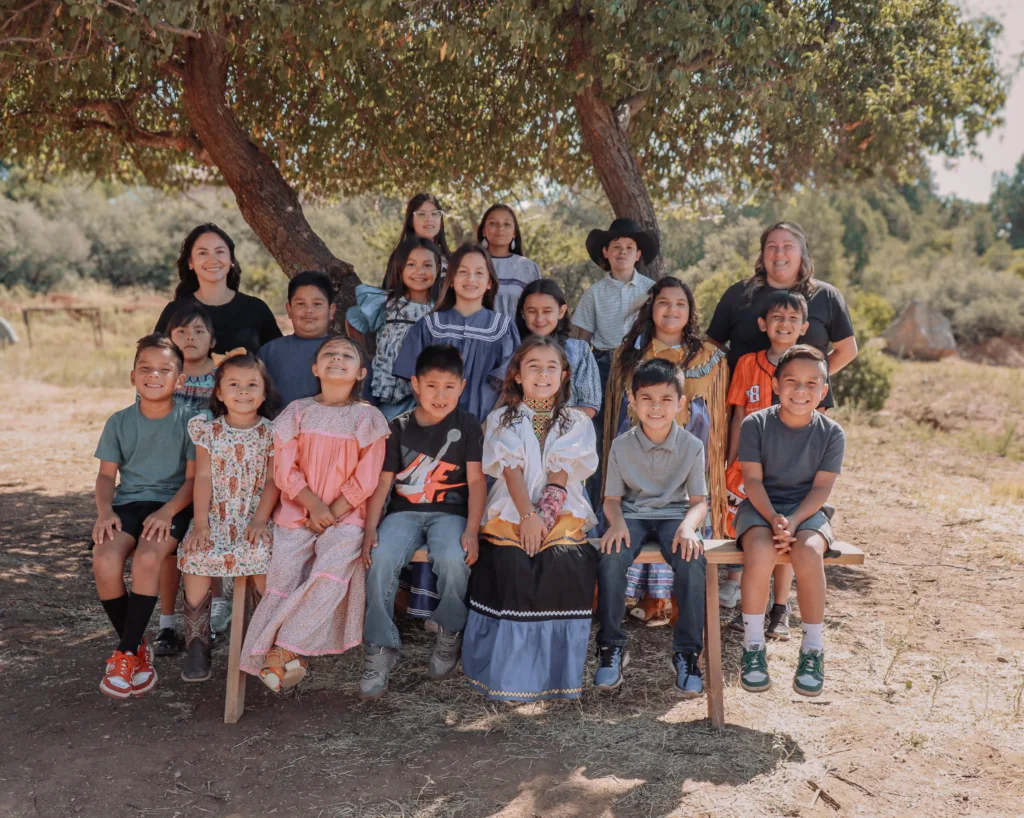
Educational autonomy has allowed the school to reflect the cultural priorities of the reservation community. Johnson is half-Navajo and grew up off the reservation, while her husband is Tonto Apache and grew up within the tribal community. Both recall opportunities to learn ancestral languages that they rejected as children. The urgency of preserving those connections is evident in federally supported research that estimated fewer than 30 speakers of the Dilzhe’e variety of Western Apache across the Tonto Apache Tribe and the Yavapai-Apache Nation in 2016. Today at the Tonto Apache Community School, an elder teaches Apache language, tribal health professionals share lessons on wellness, and learners participate in community activities alongside relatives and elders. Johnson describes the school’s development as a “chaos garden,” where opportunities emerge through relationships rather than a predetermined plan. These experiences reflect what families and community members value enough to preserve and pass along.
Currently, the school serves 11 learners in kindergarten through 8th grade, a size Johnson considers ideal. But perhaps her most significant realization has been that creating a school doesn’t mean that every family must choose it. “Not every learner thrives in a microschool setting, and that’s okay,” she acknowledged. Her oldest daughter attends a public high school, reflecting a pillar of Johnson’s educational philosophy. “That’s what school choice is: You have that choice to try this out.”
Johnson’s experience demonstrates why autonomy cannot rest solely with founders, school operators, or governments, however local their authority may be. An education program’s legitimacy as a chosen educational option depends on families retaining the freedom to participate, seek alternatives, and change their minds. For Tawnee Johnson, that principle has become central to her advocacy. “Wherever is right for you and your family. That’s your choice,” she explained. “And that’s why school choice is important, because what if that wasn’t a choice? What if that was taken away?”