When President Trump spoke about putting parents back in charge of their children’s education, my immediate reaction was: “Yes!”
I was recently invited to the White House Rose Garden for a back-to-school event focused on education freedom. Families with children filled the venue, along with people working in education and family policy from across the country.
Being invited was both an unexpected and incredible honor, and I was grateful that the work happening in small communities like mine had a place in a national conversation about educational freedom. I was also listening through the lens of nearly two decades spent first as a homeschooling mother and later as an education entrepreneur.
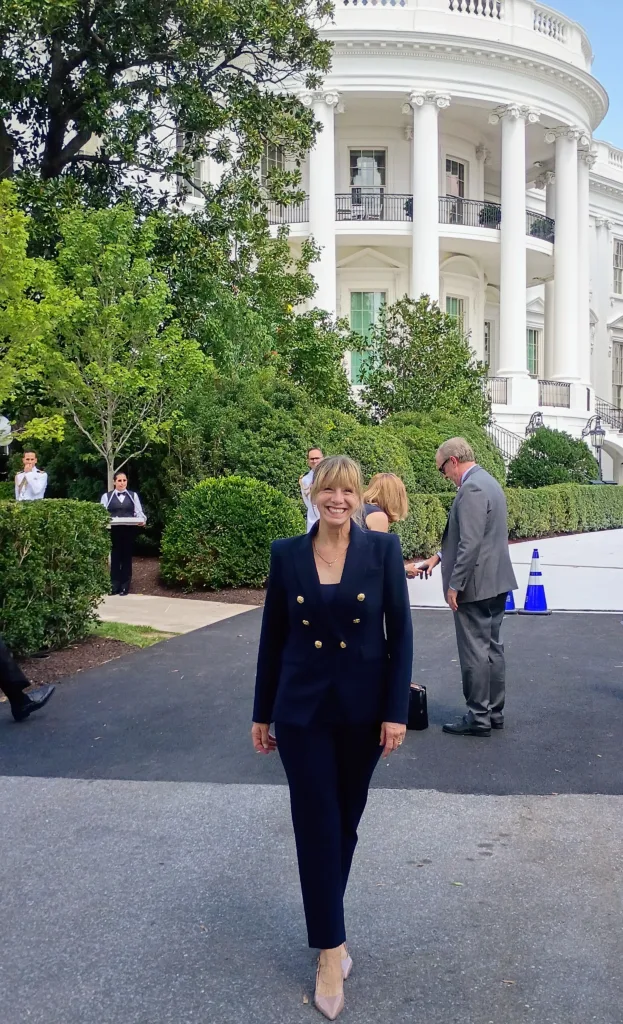
When Linda McMahon, secretary of the US Department of Education, spoke about the importance of returning educational authority to parents, I kept thinking about the families I’ve worked with over those years.
Parents cannot exercise a right they don’t know they have.
And knowing they have a choice doesn’t help much if there is nothing meaningfully different for them to choose. That reminded me of something I learned long before I became an education entrepreneur.
As a wildland firefighter, I learned about the fire triangle early in my training. Fire requires three things to sustain itself: heat, fuel, and oxygen. Remove one, and the fire cannot continue.
I think education may have a triangle of its own: freedom, knowledge, and options.
Parents need the freedom to direct their child’s education. That includes both their right to choose what type of education they want for their child, and the responsibility for the outcomes of that choice.
But freedom alone is not enough.
Families also need knowledge. They need to understand their rights and their responsibilities, know what options exist, and have enough information to make decisions with confidence.
EdChoice’s 2026 Schooling in America survey found that 65%of school parents said they would enroll their child in an Education Savings Account (ESA) program if given the opportunity. Yet, the survey shows a gap in parents’ knowledge of available resources, as half weren’t sure whether their own state even had an ESA program.
That gap matters. Freedom is difficult to exercise if families don’t know what options are available to them. For families with financial means, experience with homeschooling, or familiarity with educational choice, finding an alternative may be relatively easy. But many families have no experience with schools outside of their assigned ZIP code. Working as an educational consultant, I help many families in crisis who don’t know what questions to ask, where to look, or what other paths might be possible.
Supply becomes the next barrier. If a parent decides that their current option isn’t meeting the needs of their child, there must be somewhere else to access an education.
That might be a private school or homeschooling. Increasingly, it might also be a microschool, learning center, hybrid program, tutor, co-op, or an education entrepreneur building something that doesn’t neatly fit any existing category.
Each part of the triangle depends on the others. Freedom without knowledge leaves rights unused. Knowledge without options leaves families without access. Options without freedom leave families unable to choose alternatives others are willing to build. This is where I believe education entrepreneurship has an important role to play in the growing national conversation around educational freedom.
The Rose Garden event celebrated parental rights, homeschooling, private school access, and efforts to improve public education. I was encouraged to hear these conversations happening at the highest levels of government.
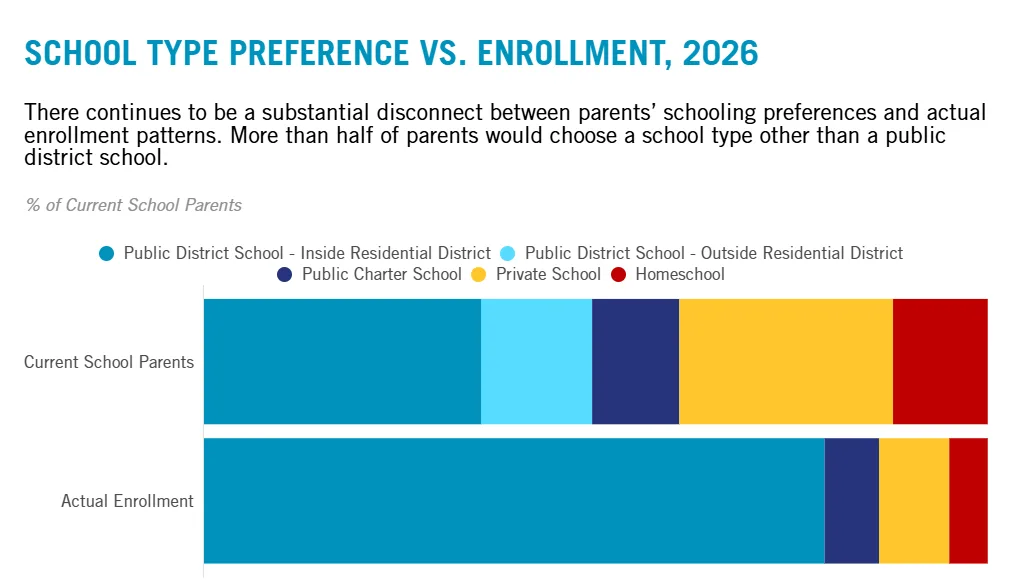
As a founder, I also found myself thinking about the people who build educational options. We know there is significant demand for greater educational choice. More than half of parents would choose a school type other than a public district school, according to the recent Ed Choice poll (see photo below).
The next question is whether enough alternatives will exist when families begin looking for them, particularly in rural communities and other places where options have historically been limited.
Fortunately, entrepreneurs are especially good at noticing unmet needs. My own learning center grew in response to families in my community who were looking for something different. I’ve since watched that same process happen across the country. Parents, teachers, tutors, and entrepreneurs see learners whose needs aren’t being met and begin asking what they could build to serve them.
Some create microschools. Others build tutoring programs, hybrid models, homeschool resources, learning centers, or something else entirely new. Most of those programs will remain small. Others will grow. Some will fail. A few may become models that people in completely different communities adapt for themselves. Diversity is one of the greatest possibilities of educational freedom.
I left the White House encouraged by the national conversation taking place around parental rights and education freedom. I also left thinking about what comes next. If we want parents to reclaim the responsibility of directing their children’s education, they need the freedom to do so. They need knowledge to understand and exercise that freedom. And when they begin seeking something different, they need meaningful options to choose from.
Freedom.Knowledge.Options.
Like the fire triangle, remove one, and the conditions change completely. Educational freedom will flourish when families have all three.